






Diese Website verwendet Cookies und ähnliche Technologien. Dabei handelt es sich um kleine Textdateien, die auf eurem Computer gespeichert und ausgelesen werden. Indem ihr auf "Alles akzeptieren" klickt, stimmt ihr der Verarbeitung von Daten, der Erstellung und Verarbeitung von individuellen Nutzungsprofilen über Websites und über Partner und Geräte hinweg sowie der Übermittlung eurer Daten an Drittanbieter zu, die eure Daten teilweise in Ländern außerhalb der Europäischen Union verarbeiten (GDPR Art. 49). Einzelheiten hierzu findet ihr in den Datenschutzhinweisen. Die Daten werden für Analysen und für eigene Zwecke Dritter verwendet. Weitere Informationen, auch über die Datenverarbeitung durch Drittanbieter und die Möglichkeit des Widerrufs, findet ihr in den Einstellungen und in unseren Datenschutzhinweisen. Hier könnt ihr mit den notwendigen Tools fortfahren.
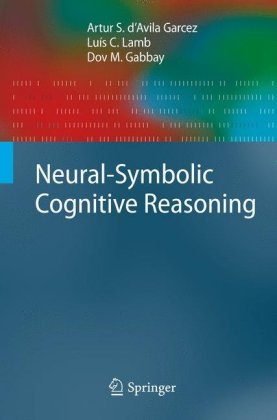
- Verlag: Springer, Berlin
- Autor: Artur S. d'Avila Garcez
- Artikel-Nr.: KNV28535305
- ISBN: 9783642092299
Humans are often extraordinary at performing practical reasoning. There are cases where the human computer, slow as it is, is faster than any artificial intelligence system. Are we faster because of the way we perceive knowledge as opposed to the way we represent it?
The authors address this question by presenting neural network models that integrate the two most fundamental phenomena of cognition: our ability to learn from experience, and our ability to reason from what has been learned. This book is the first to offer a self-contained presentation of neural network models for a number of computer science logics, including modal, temporal, and epistemic logics. By using a graphical presentation, it explains neural networks through a sound neural-symbolic integration methodology, and it focuses on the benefits of integrating effective robust learning with expressive reasoning capabilities.
The book will be invaluable reading for academic researchers, graduate students, and senior undergraduates in computer science, artificial intelligence, machine learning, cognitive science and engineering. It will also be of interest to computational logicians, and professional specialists on applications of cognitive, hybrid and artificial intelligence systems.