






Diese Website verwendet Cookies und ähnliche Technologien. Dabei handelt es sich um kleine Textdateien, die auf eurem Computer gespeichert und ausgelesen werden. Indem ihr auf "Alles akzeptieren" klickt, stimmt ihr der Verarbeitung von Daten, der Erstellung und Verarbeitung von individuellen Nutzungsprofilen über Websites und über Partner und Geräte hinweg sowie der Übermittlung eurer Daten an Drittanbieter zu, die eure Daten teilweise in Ländern außerhalb der Europäischen Union verarbeiten (GDPR Art. 49). Einzelheiten hierzu findet ihr in den Datenschutzhinweisen. Die Daten werden für Analysen und für eigene Zwecke Dritter verwendet. Weitere Informationen, auch über die Datenverarbeitung durch Drittanbieter und die Möglichkeit des Widerrufs, findet ihr in den Einstellungen und in unseren Datenschutzhinweisen. Hier könnt ihr mit den notwendigen Tools fortfahren.
- Verlag: Springer, Berlin
- Autor: Carla Sharp
- Artikel-Nr.: KNV44895043
- ISBN: 9781493905904
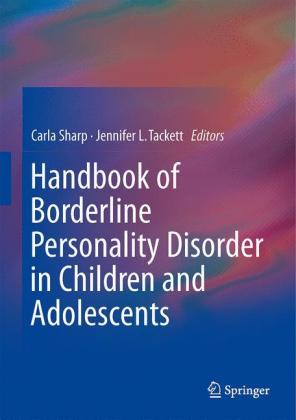
Diagnosing Borderline Personality Disorder (BPD) in young people has long been a tough call for clinicians, either for fear of stigmatizing the child or confusing the normal mood shifts of adolescence with pathology. Now, a recent upsurge in relevant research into early-onset BPD is inspiring the field to move beyond this hesitance toward a developmentally nuanced understanding of the disorder.
The Handbook of Borderline Personality Disorder in Children and Adolescents reflects the broad scope and empirical strengths of current research as well as promising advances in treatment. This comprehensive resource is authored by veteran and emerging names across disciplines, including developmental psychopathology, clinical psychology, child psychiatry, genetics and neuroscience in order to organize the field for an integrative future. Leading-edge topics range from the role of parenting in the development of BPD to trait-based versus symptom-based assessment approaches, from the life-course trajectory of BPD to the impact of the DSM-5 on diagnosis. And of particular interest are the data on youth modifications of widely used adult interventions, with session excerpts.
Key areas featured in the Handbook:
- The history of research on BPD in childhood and adolescence.
- Conceptualization and assessment issues.
- Etiology and core components of BPD.
- Developmental course and psychosocial correlates.
- Empirically supported treatment methods.
- Implications for future research, assessment and intervention.
The Handbook of Borderline Personality Disorder in Children and Adolescents is a breakthrough reference for researchers and clinicians in a wide range of disciplines, including child and school psychology and psychiatry, social work, psychotherapy and counseling, nursing management and research and personality and social psychology.