






Diese Website verwendet Cookies und ähnliche Technologien. Dabei handelt es sich um kleine Textdateien, die auf eurem Computer gespeichert und ausgelesen werden. Indem ihr auf "Alles akzeptieren" klickt, stimmt ihr der Verarbeitung von Daten, der Erstellung und Verarbeitung von individuellen Nutzungsprofilen über Websites und über Partner und Geräte hinweg sowie der Übermittlung eurer Daten an Drittanbieter zu, die eure Daten teilweise in Ländern außerhalb der Europäischen Union verarbeiten (GDPR Art. 49). Einzelheiten hierzu findet ihr in den Datenschutzhinweisen. Die Daten werden für Analysen und für eigene Zwecke Dritter verwendet. Weitere Informationen, auch über die Datenverarbeitung durch Drittanbieter und die Möglichkeit des Widerrufs, findet ihr in den Einstellungen und in unseren Datenschutzhinweisen. Hier könnt ihr mit den notwendigen Tools fortfahren.
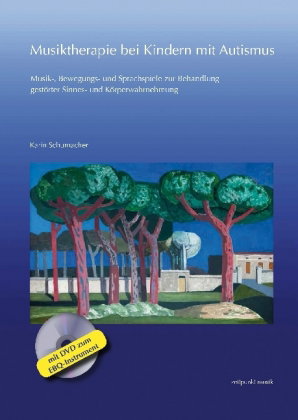
- Verlag: Reichert
- Autor: Karin Schumacher
- Artikel-Nr.: KNV67063861
- ISBN: 9783954902293
Perception of stimuli seems not to result in observable affective reaction, or the child with autism is unable to express this. The sensory impressions are presumably not reliably and therefore not meaningfully processed. Symptoms such as stereotype behaviour and inability to play as well as lack of speech or speech disabilities are the result. The theme "Autistic-Spectrum-Disorder" has been discussed extensively by experts, however, they refer mainly to behaviour modification therapies that have the aim of integration into the social world and leading an independent life. Important as these aims are, nevertheless the treatment of this disorder is in itself an important approach.
In this book a course of therapy is presented that treats the actual socio-emotional disturbance, that is presumably based on a perception processing and body feeling disturbance. The children described in this book are also mentally impaired and mostly also have no developed speech. The medium of music offers a means of communication that removes their socio-emotional isolation and relieves the lack of expression they suffer from. The film excerpts in the enclosed DVD show the development of the boy called Max. Music, movement and speech games, where the child is the starting point, without any obligation to join in or imitate, show that emotions can be aroused, which are the motor of all developments. Physical, instrumental and vocal-pre-speech utterances as a prerequisite for a communicative language are evoked, and playfully lead to interpersonal communication.The music therapy interventions described here precisely in children with pervasive developmental disorder, especially with autism show how lively and capable for development these children are.
However, these interventions have to be developed entirely by taking the the body and the affect of the child as starting point, and is determined by the situation.Only then will they help to process the sensory impressions as a unity and lead to the experience of synchronous moments.Neurobiological research confirms the need to connect perception, emotional experience, action and speech. And exactly this procedure is described here. The analysis of the videographed course of therapy with the help of the so-called "AQR-Tool" represents the development of the child Max in music therapy.Thus we can comprehend the effect of music therapy.