


Diese Website verwendet Cookies und ähnliche Technologien. Dabei handelt es sich um kleine Textdateien, die auf eurem Computer gespeichert und ausgelesen werden. Indem ihr auf "Alles akzeptieren" klickt, stimmt ihr der Verarbeitung von Daten, der Erstellung und Verarbeitung von individuellen Nutzungsprofilen über Websites und über Partner und Geräte hinweg sowie der Übermittlung eurer Daten an Drittanbieter zu, die eure Daten teilweise in Ländern außerhalb der Europäischen Union verarbeiten (GDPR Art. 49). Einzelheiten hierzu findet ihr in den Datenschutzhinweisen. Die Daten werden für Analysen und für eigene Zwecke Dritter verwendet. Weitere Informationen, auch über die Datenverarbeitung durch Drittanbieter und die Möglichkeit des Widerrufs, findet ihr in den Einstellungen und in unseren Datenschutzhinweisen. Hier könnt ihr mit den notwendigen Tools fortfahren.
- Verlag: Springer, Berlin
- Autor: Paul Drijvers
- Artikel-Nr.: KNV57225082
- ISBN: 9783319336657
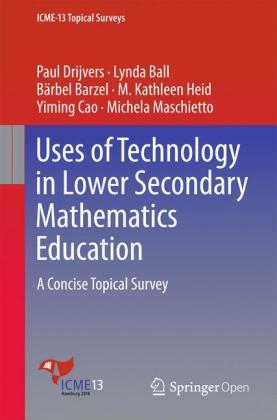
This topical survey provides an overview of the current state of the art in technology use in mathematics education, including both practice-oriented experiences and research-based evidence, as seen from an international perspective. Three core themes are discussed: Evidence of effectiveness; Digital assessment; and Communication and collaboration.
The survey's final section offers suggestions for future trends in technology-rich mathematics education and provides a research agenda reflecting those trends. Predicting what lower secondary mathematics education might look like in 2025 with respect to the role of digital tools in curricula, teaching and learning, it examines the question of how teachers can integrate physical and virtual experiences to promote a deeper understanding of mathematics.
The issues and findings presented here provide an overview of current research and offer a glimpse into a potential future characterized by the effective integration of technology to support mathematics teaching and learning at the lower secondary level.