






Diese Website verwendet Cookies und ähnliche Technologien. Dabei handelt es sich um kleine Textdateien, die auf eurem Computer gespeichert und ausgelesen werden. Indem ihr auf "Alles akzeptieren" klickt, stimmt ihr der Verarbeitung von Daten, der Erstellung und Verarbeitung von individuellen Nutzungsprofilen über Websites und über Partner und Geräte hinweg sowie der Übermittlung eurer Daten an Drittanbieter zu, die eure Daten teilweise in Ländern außerhalb der Europäischen Union verarbeiten (GDPR Art. 49). Einzelheiten hierzu findet ihr in den Datenschutzhinweisen. Die Daten werden für Analysen und für eigene Zwecke Dritter verwendet. Weitere Informationen, auch über die Datenverarbeitung durch Drittanbieter und die Möglichkeit des Widerrufs, findet ihr in den Einstellungen und in unseren Datenschutzhinweisen. Hier könnt ihr mit den notwendigen Tools fortfahren.
- Verlag: Bloomsbury Trade
- Autor: Philip Lymbery
- Artikel-Nr.: KNV66346634
- ISBN: 9781408868287
'An honest, compelling and important account, and a critical plea for a fusion of farming, food and nature to provide global ecological security' CHRIS PACKHAM
Why are so many animals facing extinction?
Climate change and poaching are not the only culprits. The impact of consumer demand for cheap meat is equally devastating, and it is vital that we confront this problem if we are to stand a chance of reducing its effect on the world around us.
· We are falsely led to believe that squeezing animals into factory farms and cultivating crops in vast, chemical-soaked prairies is a necessary evil, an efficient means of providing for an ever-expanding global population while leaving land free for wildlife
· Our planet's resources are reaching breaking point: awareness is slowly building that the wellbeing of society depends on a thriving natural world
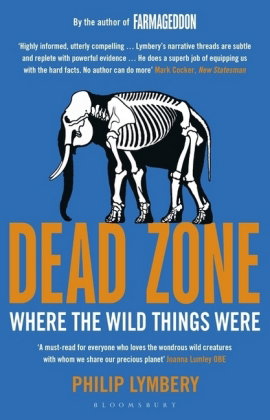
From the author of the internationally acclaimed Farmageddon, Dead Zone takes us on an eye-opening journey across the globe, focussing on a dozen iconic species - from elephants to bumblebees to penguins - and looking at the role that industrial farming is playing in their plight.