






Diese Website verwendet Cookies und ähnliche Technologien. Dabei handelt es sich um kleine Textdateien, die auf eurem Computer gespeichert und ausgelesen werden. Indem ihr auf "Alles akzeptieren" klickt, stimmt ihr der Verarbeitung von Daten, der Erstellung und Verarbeitung von individuellen Nutzungsprofilen über Websites und über Partner und Geräte hinweg sowie der Übermittlung eurer Daten an Drittanbieter zu, die eure Daten teilweise in Ländern außerhalb der Europäischen Union verarbeiten (GDPR Art. 49). Einzelheiten hierzu findet ihr in den Datenschutzhinweisen. Die Daten werden für Analysen und für eigene Zwecke Dritter verwendet. Weitere Informationen, auch über die Datenverarbeitung durch Drittanbieter und die Möglichkeit des Widerrufs, findet ihr in den Einstellungen und in unseren Datenschutzhinweisen. Hier könnt ihr mit den notwendigen Tools fortfahren.
- Verlag: Academic Press
- Autor: Hari Nair
- Artikel-Nr.: KNV61722944
- ISBN: 9780128008713
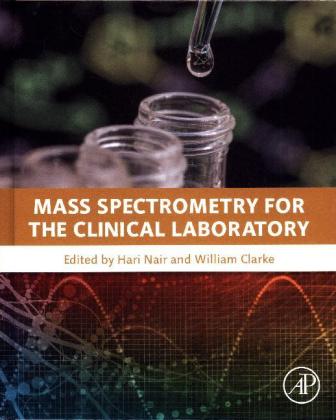
Mass Spectrometry for the Clinical Laboratory is an accessible guide to mass spectrometry and the development, validation, and implementation of the most common assays seen in clinical labs. It provides readers with practical examples for assay development, and experimental design for validation to meet CLIA requirements, appropriate interference testing, measuring, validation of ion suppression/matrix effects, and quality control. These tools offer guidance on what type of instrumentation is optimal for each assay, what options are available, and the pros and cons of each. Readers will find a full set of tools that are either directly related to the assay they want to adopt or for an analogous assay they could use as an example.
Written by expert users of the most common assays found in a clinical laboratory (clinical chemists, toxicologists, and clinical pathologists practicing mass spectrometry), the book lays out how experts in the field have chosen their mass spectrometers, purchased, installed, validated, and brought them on line for routine testing.
The early chapters of the book covers what the practitioners have learned from years of experience, the challenges they have faced, and their recommendations on how to build and validate assays to avoid problems. These chapters also include recommendations for maintaining continuity of quality in testing. The later parts of the book focuses on specific types of assays (therapeutic drugs, Vitamin D, hormones, etc.). Each chapter in this section has been written by an expert practitioner of an assay that is currently running in his or her clinical lab.