






Diese Website verwendet Cookies und ähnliche Technologien. Dabei handelt es sich um kleine Textdateien, die auf eurem Computer gespeichert und ausgelesen werden. Indem ihr auf "Alles akzeptieren" klickt, stimmt ihr der Verarbeitung von Daten, der Erstellung und Verarbeitung von individuellen Nutzungsprofilen über Websites und über Partner und Geräte hinweg sowie der Übermittlung eurer Daten an Drittanbieter zu, die eure Daten teilweise in Ländern außerhalb der Europäischen Union verarbeiten (GDPR Art. 49). Einzelheiten hierzu findet ihr in den Datenschutzhinweisen. Die Daten werden für Analysen und für eigene Zwecke Dritter verwendet. Weitere Informationen, auch über die Datenverarbeitung durch Drittanbieter und die Möglichkeit des Widerrufs, findet ihr in den Einstellungen und in unseren Datenschutzhinweisen. Hier könnt ihr mit den notwendigen Tools fortfahren.
- Verlag: Constable & Robinson
- Autor: Richard David Precht
- Artikel-Nr.: KNV31864515
- ISBN: 9781849011020
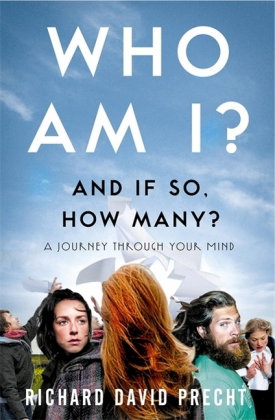
There are many books about philosophy, but Who Am I? And If So How Many? is different from the rest. Never before has anyone introduced readers so expertly and, at the same time, so light-heartedly and elegantly to the big philosophical questions.
Drawing on neuroscience, psychology, history, and even pop culture, Richard David Precht deftly elucidates the questions at the heart of human existence: What is truth? Does life have meaning? Why should I be good? and presents them in concise, witty, and engaging prose. The result is an exhilarating journey through the history of philosophy and a lucid introduction to current research on the brain.
Who Am I? And If So, How Many? is a wonderfully accessible introduction to philosophy. The book is a kaleidoscope of philosophical problems, anecdotal information, neurological and biological science, and psychological research.
The books is divided into three parts:
1) What Can I Know? focuses on the brain and the nature and scope of human knowledge, starting with questions posed by Kant, Descartes, Nietzsche, Freud, and others.
2) What Should I Do? deals with human morals and ethics, using neurological and sociological research to explain why we empathize with others and are compelled to act morally. Discusses the morality of euthanasia, abortion, cloning, and other controversial topics.
3) What Can I Hope For? centers around the most important questions in life: What is happiness and why do we fall in love? Is there a God and how can we prove God's existence? What is freedom? What is the purpose of life?