






Diese Website verwendet Cookies und ähnliche Technologien. Dabei handelt es sich um kleine Textdateien, die auf eurem Computer gespeichert und ausgelesen werden. Indem ihr auf "Alles akzeptieren" klickt, stimmt ihr der Verarbeitung von Daten, der Erstellung und Verarbeitung von individuellen Nutzungsprofilen über Websites und über Partner und Geräte hinweg sowie der Übermittlung eurer Daten an Drittanbieter zu, die eure Daten teilweise in Ländern außerhalb der Europäischen Union verarbeiten (GDPR Art. 49). Einzelheiten hierzu findet ihr in den Datenschutzhinweisen. Die Daten werden für Analysen und für eigene Zwecke Dritter verwendet. Weitere Informationen, auch über die Datenverarbeitung durch Drittanbieter und die Möglichkeit des Widerrufs, findet ihr in den Einstellungen und in unseren Datenschutzhinweisen. Hier könnt ihr mit den notwendigen Tools fortfahren.
- Verlag: Academic Press
- Autor: Susmita Bose
- Artikel-Nr.: KNV61723051
- ISBN: 9780128027929
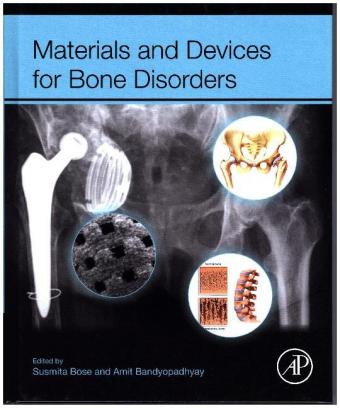
Materials for Bone Disorders is written by a cross-disciplinary team of research scientists, engineers, and clinicians and bridges the gap between materials science and bone disorders, providing integrated coverage of biomaterials and their applications. The bioceramics, biopolymers, composites, and metallic materials used in the treatment of bone disorders are introduced, as are their interactions with cells, biomolecules, and body tissues. The main types of bone disorder and disease are covered including osteoporosis, spinal injury, load bearing joint diseases, bone cancer, and forms of cranio-maxillofacial disorders.
Bone disorders are common across all ages. Various forms of bone disorders can change the lifestyle of otherwise normal and healthy people. With the development of novel materials, many forms of bone disorders are becoming manageable, allowing people to lead a fairly normal life. Specific consideration is given to areas where recent advances are enabling new treatments, such as the use of resorbable ceramics in bone tissue engineering and drug delivery, newer polymer-based implants in load-bearing contexts, and engineering biomaterials surfaces including modifying surface chemistry. Ethical and regulatory issues are also explored.