






Diese Website verwendet Cookies und ähnliche Technologien. Dabei handelt es sich um kleine Textdateien, die auf eurem Computer gespeichert und ausgelesen werden. Indem ihr auf "Alles akzeptieren" klickt, stimmt ihr der Verarbeitung von Daten, der Erstellung und Verarbeitung von individuellen Nutzungsprofilen über Websites und über Partner und Geräte hinweg sowie der Übermittlung eurer Daten an Drittanbieter zu, die eure Daten teilweise in Ländern außerhalb der Europäischen Union verarbeiten (GDPR Art. 49). Einzelheiten hierzu findet ihr in den Datenschutzhinweisen. Die Daten werden für Analysen und für eigene Zwecke Dritter verwendet. Weitere Informationen, auch über die Datenverarbeitung durch Drittanbieter und die Möglichkeit des Widerrufs, findet ihr in den Einstellungen und in unseren Datenschutzhinweisen. Hier könnt ihr mit den notwendigen Tools fortfahren.
- Verlag: Penguin Books UK
- Autor: David Graeber
- Artikel-Nr.: KNV73414891
- ISBN: 9780141983479
'Spectacular and terrifyingly true' Owen Jones
'Explosive' John McDonnell, New Statesman, Books of the Year
'Thought-provoking and funny' The Times
FT BUSINESS BOOK OF THE YEAR 2018, THE TIMES BOOK OF THE YEAR 2018, NEW STATESMAN BOOK OF THE YEAR 2018 and CITY AM BOOK OF THE YEAR 2018
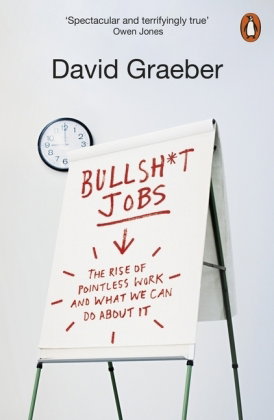
Be honest: if your job didn't exist, would anybody miss it? Have you ever wondered why not? Up to 40% of us secretly believe our jobs probably aren't necessary. In other words: they are bullshit jobs. This book shows why, and what we can do about it.
In the early twentieth century, people prophesied that technology would see us all working fifteen-hour weeks and driving flying cars. Instead, something curious happened. Not only have the flying cars not materialised, but average working hours have increased rather than decreased. And now, across the developed world, three-quarters of all jobs are in services, finance or admin: jobs that don't seem to contribute anything to society. In Bullshit Jobs, David Graeber explores how this phenomenon - one more associated with the Soviet Union, but which capitalism was supposed to eliminate - has happened. In doing so, he looks at how, rather than producing anything, work has become an end in itself; the way such work maintains the current broken system of finance capital; and, finally, how we can get out of it.
This book is for anyone whose heart has sunk at the sight of a whiteboard, who believes 'workshops' should only be for making things, or who just suspects that there might be a better way to run our world.