






Diese Website verwendet Cookies und ähnliche Technologien. Dabei handelt es sich um kleine Textdateien, die auf eurem Computer gespeichert und ausgelesen werden. Indem ihr auf "Alles akzeptieren" klickt, stimmt ihr der Verarbeitung von Daten, der Erstellung und Verarbeitung von individuellen Nutzungsprofilen über Websites und über Partner und Geräte hinweg sowie der Übermittlung eurer Daten an Drittanbieter zu, die eure Daten teilweise in Ländern außerhalb der Europäischen Union verarbeiten (GDPR Art. 49). Einzelheiten hierzu findet ihr in den Datenschutzhinweisen. Die Daten werden für Analysen und für eigene Zwecke Dritter verwendet. Weitere Informationen, auch über die Datenverarbeitung durch Drittanbieter und die Möglichkeit des Widerrufs, findet ihr in den Einstellungen und in unseren Datenschutzhinweisen. Hier könnt ihr mit den notwendigen Tools fortfahren.
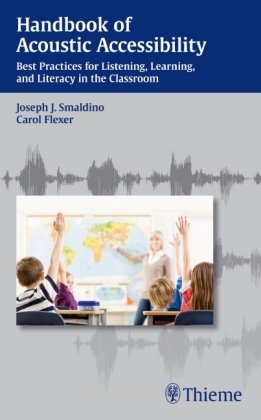
- Verlag: Thieme, Stuttgart
- Autor: Joseph J. Smaldino
- Artikel-Nr.: KNV32128423
- ISBN: 9781604067651
A practical, reliable reference that helps audiologists and teachers achieve acoustic accessibility in the classroom
Written and edited by renowned leaders in the field, Handbook of Acoustic Accessibility focuses on the acoustic conditions, therapies, and technologies that assist audiologists and teachers of hearing-impaired students in making the speech signal audible, undistorted, and accessible.
Covering topics that range from acoustic measurements in the classroom to American Academy of Audiology clinical practice guidelines for Hearing Assistance Technology (HAT), this book reflects current practices and technologies that are designed to maximize the availability of classroom speech signals.
Key Features:
- Discusses the importance of making speech accessible for auditory-linguistic brain development and how acoustic accessibility impacts listening, learning, and literacy- Uses graphics and charts to make difficult acoustic concepts easily understandable- Includes the latest information on desirable acoustic standards- Contains cutting edge information on technologies such as smart phone apps for use in making acoustic measurements and audio distribution systems
This concise, comprehensive reference is designed to be the go-to guide for busy audiologists, speech-language pathologists, and teachers of hearing-impaired students who need practical information for achieving acoustic accessibility.