






Diese Website verwendet Cookies und ähnliche Technologien. Dabei handelt es sich um kleine Textdateien, die auf eurem Computer gespeichert und ausgelesen werden. Indem ihr auf "Alles akzeptieren" klickt, stimmt ihr der Verarbeitung von Daten, der Erstellung und Verarbeitung von individuellen Nutzungsprofilen über Websites und über Partner und Geräte hinweg sowie der Übermittlung eurer Daten an Drittanbieter zu, die eure Daten teilweise in Ländern außerhalb der Europäischen Union verarbeiten (GDPR Art. 49). Einzelheiten hierzu findet ihr in den Datenschutzhinweisen. Die Daten werden für Analysen und für eigene Zwecke Dritter verwendet. Weitere Informationen, auch über die Datenverarbeitung durch Drittanbieter und die Möglichkeit des Widerrufs, findet ihr in den Einstellungen und in unseren Datenschutzhinweisen. Hier könnt ihr mit den notwendigen Tools fortfahren.
- Verlag: Princeton University Press
- Autor: Christopher Clark
- Artikel-Nr.: KNV74803891
- ISBN: 9780691181653
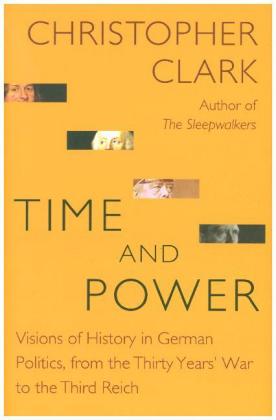
This groundbreaking book presents new perspectives on how the exercise of power is shaped by different notions of time. Acclaimed historian Christopher Clark draws on four key figures from German history - Friedrich Wilhelm of Brandenburg-Prussia, Frederick the Great, Otto von Bismarck, and Adolf Hitler - to look at history through a temporal lens and ask how historical actors and their regimes embody unique conceptions of time.
Inspired by the insights of Reinhart Koselleck and François Hartog, two pioneers of the "temporal turn" in historiography, Clark shows how Friedrich Wilhelm rejected the notion of continuity with the past, believing instead that a sovereign must liberate the state from the entanglements of tradition to choose freely among different possible futures. He demonstrates how Frederick the Great abandoned this paradigm for a neoclassical vision of history in which sovereign and state transcend time altogether, and how Bismarck believed that the statesman's duty was to preserve the timeless permanence of the state amid the torrent of historical change. Clark describes how Hitler did not seek to revolutionize history like Stalin and Mussolini, but instead sought to evade history altogether, emphasizing timeless racial archetypes and a prophetically foretold future.
legantly written and boldly innovative, Time and Power takes readers from the Thirty Years' War to the fall of the Third Reich, revealing the connection between political power and the distinct temporalities of the leaders who wield it.