






Diese Website verwendet Cookies und ähnliche Technologien. Dabei handelt es sich um kleine Textdateien, die auf eurem Computer gespeichert und ausgelesen werden. Indem ihr auf "Alles akzeptieren" klickt, stimmt ihr der Verarbeitung von Daten, der Erstellung und Verarbeitung von individuellen Nutzungsprofilen über Websites und über Partner und Geräte hinweg sowie der Übermittlung eurer Daten an Drittanbieter zu, die eure Daten teilweise in Ländern außerhalb der Europäischen Union verarbeiten (GDPR Art. 49). Einzelheiten hierzu findet ihr in den Datenschutzhinweisen. Die Daten werden für Analysen und für eigene Zwecke Dritter verwendet. Weitere Informationen, auch über die Datenverarbeitung durch Drittanbieter und die Möglichkeit des Widerrufs, findet ihr in den Einstellungen und in unseren Datenschutzhinweisen. Hier könnt ihr mit den notwendigen Tools fortfahren.
- Verlag: Hatje Cantz Verlag
- Autor: David Lurie
- Artikel-Nr.: KNV77411410
- ISBN: 9783775745949
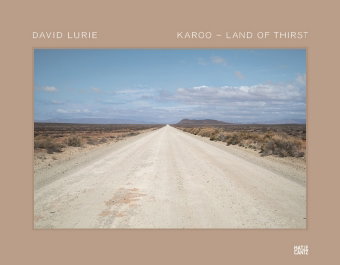
The 'Karoo' (meaning Land of Thirst) is a semi-desert landscape in the high plains of South Africa, occupying nearly a third of the country. Due to its extremes of climate, this vast hinterland was largely uninhabited by European settlers until the early nineteenth century, but since then intensive sheep farming has destroyed the Karoo's sensitive ecological balance, which has become increasingly arid, even compromising South Africa's food security. In his highly subjective style, Lurie captures the vast, barren Karoo plains, stone mounds, gravel roads, abandoned towns, and rare water sources. His images inquire into the influence of humans on the environment and remind us of the importance, as well as the fundamental beauty, of nature.
David Lurie (* 1951) taught philosophy and worked as an economics consultant before turning to photography. He returned to South Africa from the UK in 2011; he now works and lives in Cape Town.
EXHIBITION
A4 Arts Foundation, Capetown
November 14-28, 2019
DAVID LURIE (* 1951) taught philosophy and worked as an economics consultant before turning to photography. He returned to South Africa from the UK in 2011; he now works and lives in Cape Town.