






Diese Website verwendet Cookies und ähnliche Technologien. Dabei handelt es sich um kleine Textdateien, die auf eurem Computer gespeichert und ausgelesen werden. Indem ihr auf "Alles akzeptieren" klickt, stimmt ihr der Verarbeitung von Daten, der Erstellung und Verarbeitung von individuellen Nutzungsprofilen über Websites und über Partner und Geräte hinweg sowie der Übermittlung eurer Daten an Drittanbieter zu, die eure Daten teilweise in Ländern außerhalb der Europäischen Union verarbeiten (GDPR Art. 49). Einzelheiten hierzu findet ihr in den Datenschutzhinweisen. Die Daten werden für Analysen und für eigene Zwecke Dritter verwendet. Weitere Informationen, auch über die Datenverarbeitung durch Drittanbieter und die Möglichkeit des Widerrufs, findet ihr in den Einstellungen und in unseren Datenschutzhinweisen. Hier könnt ihr mit den notwendigen Tools fortfahren.
- Verlag: HarperCollins UK
- Autor: David Quammen
- Artikel-Nr.: KNV77957678
- ISBN: 9780008310714
Longlisted for the National Book Award for Nonfiction and A New York Times Notable Book of 2018.
Our understanding of the 'tree of life', with powerful implications for human genetics, human health and our own human nature, has recently completely changed.
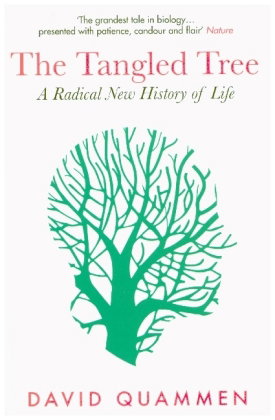
This book is about a new method of telling the story of life on earth - through molecular phylogenetics. It involves a fairly simple method - the reading of the deep history of life by looking at the variation in protein molecules found in living organisms. For instance, we now know that roughly eight per cent of the human genome arrived not through traditional inheritance from directly ancestral forms, but sideways by viral infection.
In The Tangled Tree, acclaimed science writer David Quammen chronicles these discoveries through the lives of the researchers who made them - such as Carl Woese, the most important little-known biologist of the twentieth century; Lynn Margulis, the notorious maverick whose wild ideas about 'mosaic' creatures proved to be true; and Tsutomu Wantanabe, who discovered that the scourge of antibiotic-resistant bacteria is a direct result of horizontal gene transfer, bringing the deep study of genome histories to bear on a global crisis in public health.
Quammen explains how molecular studies of evolution have brought startling recognitions about the tangled tree of life - including where we humans fit into it. Thanks to new technologies, we now have the ability to alter even our genetic composition - through sideways insertions, as nature has long been doing. The Tangled Tree is a brilliant exploration of our transformed understanding of evolution and of life's history itself.