






Diese Website verwendet Cookies und ähnliche Technologien. Dabei handelt es sich um kleine Textdateien, die auf eurem Computer gespeichert und ausgelesen werden. Indem ihr auf "Alles akzeptieren" klickt, stimmt ihr der Verarbeitung von Daten, der Erstellung und Verarbeitung von individuellen Nutzungsprofilen über Websites und über Partner und Geräte hinweg sowie der Übermittlung eurer Daten an Drittanbieter zu, die eure Daten teilweise in Ländern außerhalb der Europäischen Union verarbeiten (GDPR Art. 49). Einzelheiten hierzu findet ihr in den Datenschutzhinweisen. Die Daten werden für Analysen und für eigene Zwecke Dritter verwendet. Weitere Informationen, auch über die Datenverarbeitung durch Drittanbieter und die Möglichkeit des Widerrufs, findet ihr in den Einstellungen und in unseren Datenschutzhinweisen. Hier könnt ihr mit den notwendigen Tools fortfahren.
- Verlag: Wiley-VCH
- Autor: Bharat Singh
- Artikel-Nr.: KNV80201901
- ISBN: 9783527347322
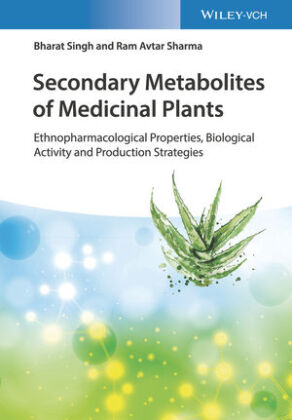
Secondary metabolites of plants are a treasure trove of novel compounds with potential pharmaceutical applications. Consequently, the nature of these metabolites as well as strategies for the targeted expression and/or purification is of high interest. Regarding their biological and pharmacological activity and ethnopharmacological properties, this book offers a comprehensive treatment of 100 plant species, including Abutilon, Aloe, Cannabis, Capsicum, Jasminum, Malva, Phyllanthus, Stellaria, Thymus, Vitis, Zingiber, and more. It also discusses the cell culture conditions and various strategies used for enhancing the production of targeted metabolites in plant cell cultures.
Secondary Metabolites of Medicinal Plants: Ethnopharmacological Properties, Biological Activity and Production Strategies is presented in four parts. Part I provides a complete introduction to the subject. Part II looks at the ethnomedicinal and pharmacological properties, chemical structures, and culture conditions of secondary metabolites. The third part examines the many strategies of secondary metabolites production, including: biotransformation; culture conditions; feeding of precursors; genetic transformation; immobilization; and oxygenation. The last section concludes with an overview of everything learned.
-Provides information on cell culture conditions and targeted extraction of secondary metabolites confirmed by relevant literature
-Presents the structures of secondary metabolites of 100 plant species together with their biological and pharmacological activity
-Discusses plant species regarding their distribution, habitat, and ethnopharmacalogical properties
-Presents strategies of secondary metabolites production, such as organ culture, pH, elicitation, hairy root cultures, light, and mutagenesis
Secondary Metabolites of Medicinal Plants is an important book for students, professionals, and biotechnologists interested in the biological and pharmacological activity and ethnopharmacological properties of plants.