






Diese Website verwendet Cookies und ähnliche Technologien. Dabei handelt es sich um kleine Textdateien, die auf eurem Computer gespeichert und ausgelesen werden. Indem ihr auf "Alles akzeptieren" klickt, stimmt ihr der Verarbeitung von Daten, der Erstellung und Verarbeitung von individuellen Nutzungsprofilen über Websites und über Partner und Geräte hinweg sowie der Übermittlung eurer Daten an Drittanbieter zu, die eure Daten teilweise in Ländern außerhalb der Europäischen Union verarbeiten (GDPR Art. 49). Einzelheiten hierzu findet ihr in den Datenschutzhinweisen. Die Daten werden für Analysen und für eigene Zwecke Dritter verwendet. Weitere Informationen, auch über die Datenverarbeitung durch Drittanbieter und die Möglichkeit des Widerrufs, findet ihr in den Einstellungen und in unseren Datenschutzhinweisen. Hier könnt ihr mit den notwendigen Tools fortfahren.
- Verlag: Simon & Schuster US
- Autor: Christopher Ryan
- Artikel-Nr.: KNV80185903
- ISBN: 9781982135652
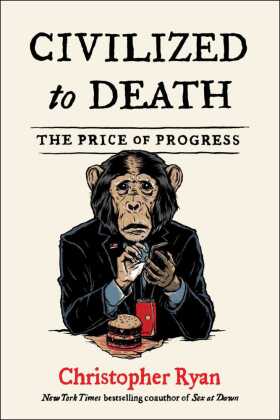
Most of us have instinctive evidence the world is ending-balmy December days, face-to-face conversation replaced with heads-to-screens zomboidism, a world at constant war, a political system in disarray. We hear some myths and lies so frequently that they feel like truths: Civilization is humankind's greatest accomplishment. Progress is undeniable. Count your blessings. You're lucky to be alive here and now. Well, maybe we are and maybe we aren't. Civilized to Death counters the idea that progress is inherently good, arguing that the "progress" defining our age is analogous to an advancing disease.
Prehistoric life, of course, was not without serious dangers and disadvantages. Many babies died in infancy. A broken bone, infected wound, snakebite, or difficult pregnancy could be life-threatening. But ultimately, Ryan argues, were these pre-civilized dangers more murderous than modern scourges, such as car accidents, cancers, cardiovascular disease, and a technologically prolonged dying process? At a time when our ecology, our society, and our own sense of selves feels increasingly imperiled, an accurate understanding of our species' long prelude to civilization is vital to a clear sense of the ultimate value of civilization-and its costs. In Civilized to Death, Ryan makes the claim that we should start looking backwards to find our way into a better future.