






Diese Website verwendet Cookies und ähnliche Technologien. Dabei handelt es sich um kleine Textdateien, die auf eurem Computer gespeichert und ausgelesen werden. Indem ihr auf "Alles akzeptieren" klickt, stimmt ihr der Verarbeitung von Daten, der Erstellung und Verarbeitung von individuellen Nutzungsprofilen über Websites und über Partner und Geräte hinweg sowie der Übermittlung eurer Daten an Drittanbieter zu, die eure Daten teilweise in Ländern außerhalb der Europäischen Union verarbeiten (GDPR Art. 49). Einzelheiten hierzu findet ihr in den Datenschutzhinweisen. Die Daten werden für Analysen und für eigene Zwecke Dritter verwendet. Weitere Informationen, auch über die Datenverarbeitung durch Drittanbieter und die Möglichkeit des Widerrufs, findet ihr in den Einstellungen und in unseren Datenschutzhinweisen. Hier könnt ihr mit den notwendigen Tools fortfahren.
- Verlag: Simon & Schuster US
- Autor: Valerie Hansen
- Artikel-Nr.: KNV80653760
- ISBN: 9781982144494
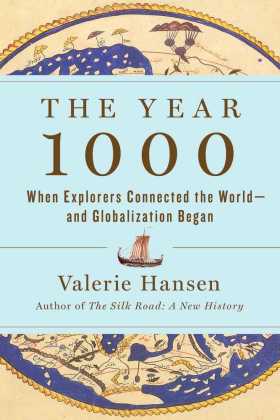
In history, myth often abides. It was long assumed that the centuries immediately prior to 1000 AD were lacking in any major cultural developments or geopolitical encounters, that the Europeans hadn't yet discovered North America, that the farthest anyone had traveled over sea was the Vikings' invasion of Britain. But how, then, to explain the presence of blonde-haired, blue-eyed people in Mayan temple murals in Chichen Itza, Mexico? Could it be possible that the Vikings had found their way to the Americas during the height of the Mayan empire?
Valerie Hansen, a much honored historian, argues that the year 1000 was the world's first point of major cultural exchange and exploration. Drawing on nearly thirty years of research on medieval China and global history, she presents a compelling account of first encounters between disparate societies. As civilizations on at least five continents ventured outward, they spread technology, agriculture, and religion. These encounters, she shows, made it possible for Christopher Columbus to reach the "New World" in 1492, and set the stage for the process of globalization that so dominates the modern era.
For readers of Jared Diamond's Guns, Germs, and Steel and Yuval Noah Harari's Sapiens, The Year 1000 is an intellectually daring, provocative account that will make you rethink everything you thought you knew about how the modern world came to be. It will also hold up a mirror to the hopes and fears we experience today.