






Diese Website verwendet Cookies und ähnliche Technologien. Dabei handelt es sich um kleine Textdateien, die auf eurem Computer gespeichert und ausgelesen werden. Indem ihr auf "Alles akzeptieren" klickt, stimmt ihr der Verarbeitung von Daten, der Erstellung und Verarbeitung von individuellen Nutzungsprofilen über Websites und über Partner und Geräte hinweg sowie der Übermittlung eurer Daten an Drittanbieter zu, die eure Daten teilweise in Ländern außerhalb der Europäischen Union verarbeiten (GDPR Art. 49). Einzelheiten hierzu findet ihr in den Datenschutzhinweisen. Die Daten werden für Analysen und für eigene Zwecke Dritter verwendet. Weitere Informationen, auch über die Datenverarbeitung durch Drittanbieter und die Möglichkeit des Widerrufs, findet ihr in den Einstellungen und in unseren Datenschutzhinweisen. Hier könnt ihr mit den notwendigen Tools fortfahren.
- Verlag: Penguin Random House
- Autor: Alan Watts
- Artikel-Nr.: KNV81698290
- ISBN: 9780307741202
The brain can only assume its proper behavior when consciousness is doing what it is designed for: not writhing and whirling to get out of present experience, but being effortlessly aware of it.
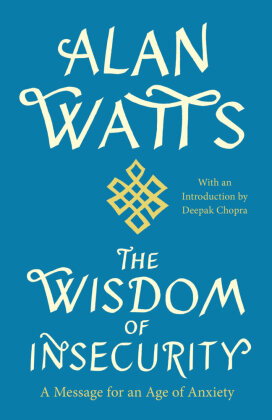
Alan Watts draws on the wisdom of Eastern philosophy and religion in this timeless and classic guide to living a more fulfilling life. His central insight is more relevant now than ever: when we spend all of our time worrying about the future and lamenting the past, we are unable to enjoy the present moment the only one we are actually able to inhabit.
Watts offers the liberating message that true certitude and security come only from understanding that impermanence and insecurity are the essence of our existence. He highlights the futility of endlessly chasing moving goalposts, whether they consist of financial success, stability, or escape from pain, and shows that it is only by acknowledging what we do not know that we can learn anything truly worth knowing.
In The Wisdom of Insecurity, Watts explains complex concepts in beautifully simple terms, making this the kind of book you can return to again and again for comfort and insight in challenging times.
Perhaps the foremost interpreter of Eastern disciplines for the contemporary West, Watts had the rare gift of writing beautifully the unwritable. Los Angeles Times