






Diese Website verwendet Cookies und ähnliche Technologien. Dabei handelt es sich um kleine Textdateien, die auf eurem Computer gespeichert und ausgelesen werden. Indem ihr auf "Alles akzeptieren" klickt, stimmt ihr der Verarbeitung von Daten, der Erstellung und Verarbeitung von individuellen Nutzungsprofilen über Websites und über Partner und Geräte hinweg sowie der Übermittlung eurer Daten an Drittanbieter zu, die eure Daten teilweise in Ländern außerhalb der Europäischen Union verarbeiten (GDPR Art. 49). Einzelheiten hierzu findet ihr in den Datenschutzhinweisen. Die Daten werden für Analysen und für eigene Zwecke Dritter verwendet. Weitere Informationen, auch über die Datenverarbeitung durch Drittanbieter und die Möglichkeit des Widerrufs, findet ihr in den Einstellungen und in unseren Datenschutzhinweisen. Hier könnt ihr mit den notwendigen Tools fortfahren.
- Verlag: MIT Press
- Autor: Kees Dorst
- Artikel-Nr.: KNV53296513
- ISBN: 9780262324311
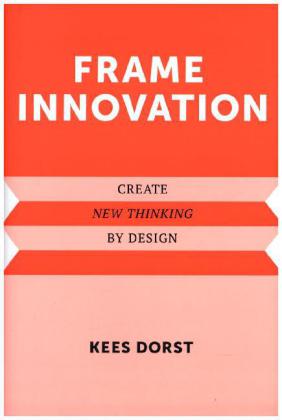
When organizations apply old methods of problem-solving to new kinds of problems, they may accomplish only temporary fixes or some ineffectual tinkering around the edges. Today's problems are a new breed open, complex, dynamic, and networked and require a radically different response. In this book, Kees Dorst describes a new, innovation-centered approach to problem-solving in organizations: frame creation. It applies design thinking, but it goes beyond the borrowed tricks and techniques that usually characterize that term. Frame creation focuses not on the generation of solutions but on the ability to create new approaches to the problem situation itself.
The strategies Dorst presents are drawn from the unique, sophisticated, multilayered practices of top designers, and from insights that have emerged from fifty years of design research. Dorst describes the nine steps of the frame creation process and illustrates their application to real-world problems with a series of varied case studies. He maps innovative solutions that include rethinking a store layout so retail spaces encourage purchasing rather than stealing, applying the frame of a music festival to understand late-night problems of crime and congestion in a club district, and creative ways to attract young employees to a temporary staffing agency. Dorst provides tools and methods for implementing frame creation, offering not so much a how-to manual as a do-it-yourself handbook a guide that will help practitioners develop their own approaches to problem-solving and creating innovation.