






Diese Website verwendet Cookies und ähnliche Technologien. Dabei handelt es sich um kleine Textdateien, die auf eurem Computer gespeichert und ausgelesen werden. Indem ihr auf "Alles akzeptieren" klickt, stimmt ihr der Verarbeitung von Daten, der Erstellung und Verarbeitung von individuellen Nutzungsprofilen über Websites und über Partner und Geräte hinweg sowie der Übermittlung eurer Daten an Drittanbieter zu, die eure Daten teilweise in Ländern außerhalb der Europäischen Union verarbeiten (GDPR Art. 49). Einzelheiten hierzu findet ihr in den Datenschutzhinweisen. Die Daten werden für Analysen und für eigene Zwecke Dritter verwendet. Weitere Informationen, auch über die Datenverarbeitung durch Drittanbieter und die Möglichkeit des Widerrufs, findet ihr in den Einstellungen und in unseren Datenschutzhinweisen. Hier könnt ihr mit den notwendigen Tools fortfahren.
- Verlag: Reichert
- Autor: David Prager
- Artikel-Nr.: KNV82508016
- ISBN: 9783920153322
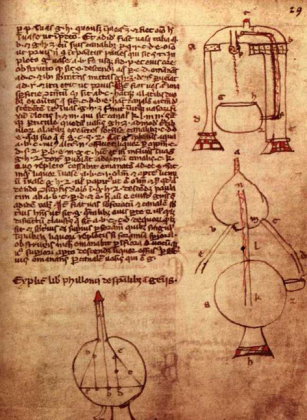
Beginning in 1870, Latin and Arabic versions of his Pneumatica were rediscovered, after a period of oblivion that had lasted a few centuries. The work is a thoroughly illustrated treatise on physical demonstrations, but when it was published, about 1900, the authentic manuscript drawings were omitted and other elements, including the archeological records, were disregarded. A rich interplay of historic traditions was reduced to oversimplified formulations.
In the new edition, the western and eastern traditions of the Pneumatica are juxtaposed for the first time. The work is reproduced as a facsimile from Clm 534, a Latin codex of the XIVth century, with the authentic illustrations. There follows a transcript of this facsimile, collated with a score of earlier and later copies. Also included are newly discovered Greek, Latin-Gothic, and Italian forms of Philo's work, and a full English translation, which presents the Arabic version (aya-Sofya ms. 3713) with its stylistically remarkable drawings and with separate notes in Latin text supplements and variants.
In this annotations, the editor evaluates the physical demonstration of this work, as a contribution to the growth of the experimental method. He also discusses the probable periods when individual parts and versions of the "Pneumatica" were developed, after Philo's writing of the original work, and the various times during which the work exercised technical or scientific influence.