






Diese Website verwendet Cookies und ähnliche Technologien. Dabei handelt es sich um kleine Textdateien, die auf eurem Computer gespeichert und ausgelesen werden. Indem ihr auf "Alles akzeptieren" klickt, stimmt ihr der Verarbeitung von Daten, der Erstellung und Verarbeitung von individuellen Nutzungsprofilen über Websites und über Partner und Geräte hinweg sowie der Übermittlung eurer Daten an Drittanbieter zu, die eure Daten teilweise in Ländern außerhalb der Europäischen Union verarbeiten (GDPR Art. 49). Einzelheiten hierzu findet ihr in den Datenschutzhinweisen. Die Daten werden für Analysen und für eigene Zwecke Dritter verwendet. Weitere Informationen, auch über die Datenverarbeitung durch Drittanbieter und die Möglichkeit des Widerrufs, findet ihr in den Einstellungen und in unseren Datenschutzhinweisen. Hier könnt ihr mit den notwendigen Tools fortfahren.
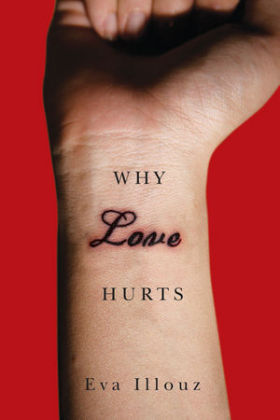
- Verlag: Wiley & Sons
- Autor: Eva Illouz
- Artikel-Nr.: KNV40656494
- ISBN: 9780745671079
Despite the widespread and almost collective character of these experiences, our culture insists they are the result of faulty or insufficiently mature psyches. For many, the Freudian idea that the family designs the pattern of an individual's erotic career has been the main explanation for why and how we fail to find or sustain love. Psychoanalysis and popular psychology have succeeded spectacularly in convincing us that individuals bear responsibility for the misery of their romantic and erotic lives. The purpose of this book is to change our way of thinking about what is wrong in modern relationships. The problem is not dysfunctional childhoods or insufficiently self-aware psyches, but rather the institutional forces shaping how we love.
The argument of this book is that the modern romantic experience is shaped by a fundamental transformation in the ecology and architecture of romantic choice. The samples from which men and women choose a partner, the modes of evaluating prospective partners, the very importance of choice and autonomy and what people imagine to be the spectrum of their choices: all these aspects of choice have transformed the very core of the will, how we want a partner, the sense of worth bestowed by relationships, and the organization of desire.
This book does to love what Marx did to commodities: it shows that it is shaped by social relations and institutions and that it circulates in a marketplace of unequal actors.