






Diese Website verwendet Cookies und ähnliche Technologien. Dabei handelt es sich um kleine Textdateien, die auf eurem Computer gespeichert und ausgelesen werden. Indem ihr auf "Alles akzeptieren" klickt, stimmt ihr der Verarbeitung von Daten, der Erstellung und Verarbeitung von individuellen Nutzungsprofilen über Websites und über Partner und Geräte hinweg sowie der Übermittlung eurer Daten an Drittanbieter zu, die eure Daten teilweise in Ländern außerhalb der Europäischen Union verarbeiten (GDPR Art. 49). Einzelheiten hierzu findet ihr in den Datenschutzhinweisen. Die Daten werden für Analysen und für eigene Zwecke Dritter verwendet. Weitere Informationen, auch über die Datenverarbeitung durch Drittanbieter und die Möglichkeit des Widerrufs, findet ihr in den Einstellungen und in unseren Datenschutzhinweisen. Hier könnt ihr mit den notwendigen Tools fortfahren.
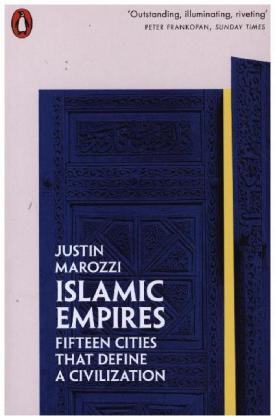
- Verlag: Penguin Books UK
- Autor: Justin Marozzi
- Artikel-Nr.: KNV82944877
- ISBN: 9780141981093
'Outstanding, illuminating, compelling ... a riveting read' Peter Frankopan, Sunday Times
Islamic civilization was once the envy of the world. From a succession of glittering, cosmopolitan capitals, Islamic empires lorded it over the Middle East, North Africa, Central Asia and swathes of the Indian subcontinent. For centuries the caliphate was both ascendant on the battlefield and triumphant in the battle of ideas, its cities unrivalled powerhouses of artistic grandeur, commercial power, spiritual sanctity and forward-looking thinking.
Islamic Empires is a history of this rich and diverse civilization told through its greatest cities over fifteen centuries, from the beginnings of Islam in Mecca in the seventh century to the astonishing rise of Doha in the twenty-first.
It dwells on the most remarkable dynasties ever to lead the Muslim world - the Abbasids of Baghdad, the Umayyads of Damascus and Cordoba, the Merinids of Fez, the Ottomans of Istanbul, the Mughals of India and the Safavids of Isfahan - and some of the most charismatic leaders in Muslim history, from Saladin in Cairo and mighty Tamerlane of Samarkand to the poet-prince Babur in his mountain kingdom of Kabul and the irrepressible Maktoum dynasty of Dubai. It focuses on these fifteen cities at some of the defining moments in Islamic history: from the Prophet Mohammed receiving his divine revelations in Mecca and the First Crusade of 1099 to the conquest of Constantinople in 1453 and the phenomenal creation of the merchant republic of Beirut in the nineteenth century.