






Diese Website verwendet Cookies und ähnliche Technologien. Dabei handelt es sich um kleine Textdateien, die auf eurem Computer gespeichert und ausgelesen werden. Indem ihr auf "Alles akzeptieren" klickt, stimmt ihr der Verarbeitung von Daten, der Erstellung und Verarbeitung von individuellen Nutzungsprofilen über Websites und über Partner und Geräte hinweg sowie der Übermittlung eurer Daten an Drittanbieter zu, die eure Daten teilweise in Ländern außerhalb der Europäischen Union verarbeiten (GDPR Art. 49). Einzelheiten hierzu findet ihr in den Datenschutzhinweisen. Die Daten werden für Analysen und für eigene Zwecke Dritter verwendet. Weitere Informationen, auch über die Datenverarbeitung durch Drittanbieter und die Möglichkeit des Widerrufs, findet ihr in den Einstellungen und in unseren Datenschutzhinweisen. Hier könnt ihr mit den notwendigen Tools fortfahren.
- Verlag: Springer, Berlin
- Autor: Johann G. Zaller
- Artikel-Nr.: KNV83809957
- ISBN: 9783030505295
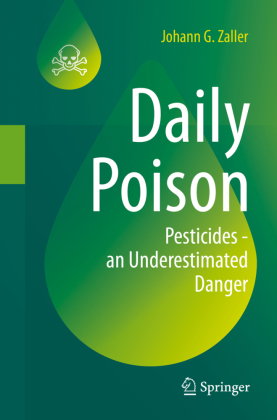
This book is a sound science report about the consequences of pesticides to nature, health and environment.
The book shares essential insights into the use of pesticides in agriculture, discusses the politics, rhetoric and profits involved, addresses the potential health and ecological risks of pesticides in our daily lives, and debates possible solutions. Does sustainable agriculture exist, and is agriculture without pesticides possible at all?
Moreover, the author gives insight into his scientific work, the set-up of the experiments, and also writes about his very own experiences with the media and press after publication of his studies.
For many years, Johann G. Zaller, an ecologist at the University of Natural Resources and Life Sciences in Vienna, and his team, have been researching applied chemicals and their effects on the environment. Their findings, together with relevant literature and media reports, are presented in this book, which offers a unique resource for anyone who wants to know the nature and background of pesticides and how we come into contact with them in our daily lives.
Ever ate an apple? Read this book!