






Diese Website verwendet Cookies und ähnliche Technologien. Dabei handelt es sich um kleine Textdateien, die auf eurem Computer gespeichert und ausgelesen werden. Indem ihr auf "Alles akzeptieren" klickt, stimmt ihr der Verarbeitung von Daten, der Erstellung und Verarbeitung von individuellen Nutzungsprofilen über Websites und über Partner und Geräte hinweg sowie der Übermittlung eurer Daten an Drittanbieter zu, die eure Daten teilweise in Ländern außerhalb der Europäischen Union verarbeiten (GDPR Art. 49). Einzelheiten hierzu findet ihr in den Datenschutzhinweisen. Die Daten werden für Analysen und für eigene Zwecke Dritter verwendet. Weitere Informationen, auch über die Datenverarbeitung durch Drittanbieter und die Möglichkeit des Widerrufs, findet ihr in den Einstellungen und in unseren Datenschutzhinweisen. Hier könnt ihr mit den notwendigen Tools fortfahren.
- Verlag: HarperCollins US
- Autor: David Remnick
- Artikel-Nr.: KNV83958020
- ISBN: 9780063017542
A New York Times
New & Noteworthy Book
One of the Daily
Beast's 5 Essential Books to Read Before the Election
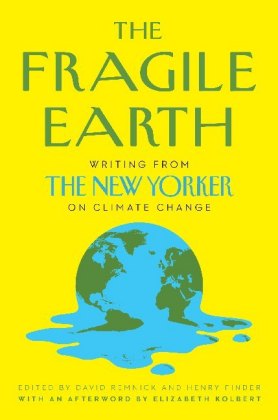
A collection of the New Yorker's groundbreaking reporting from the front lines of climate change-including writing from Bill McKibben, Elizabeth Kolbert, Ian Frazier, Kathryn Schulz, and more
Just one year after climatologist James Hansen first came before a Senate committee and testified that the Earth was now warmer than it had ever been in recorded history, thanks to humankind's heedless consumption of fossil fuels, New Yorker writer Bill McKibben published a deeply reported and considered piece on climate change and what it could mean for the planet.
At the time, the piece was to some speculative to the point of alarmist; read now, McKibben's work is heroically prescient. Since then, the New Yorker has devoted enormous attention to climate change, describing the causes of the crisis, the political and ecological conditions we now find ourselves in, and the scenarios and solutions we face.
The Fragile Earth tells the story of climate change-its past, present, and future-taking readers from Greenland to the Great Plains, and into both laboratories and rain forests. It features some of the best writing on global warming from the last three decades, including Bill McKibben's seminal essay "The End of Nature," the first piece to popularize both the science and politics of climate change for a general audience, and the Pulitzer Prize-winning work of Elizabeth Kolbert, as well as Kathryn Schulz, Dexter Filkins, Jonathan Franzen, Ian Frazier, Eric Klinenberg, and others. The result, in its range, depth, and passion, promises to bring light, and sometimes heat, to the great emergency of our age.