






Diese Website verwendet Cookies und ähnliche Technologien. Dabei handelt es sich um kleine Textdateien, die auf eurem Computer gespeichert und ausgelesen werden. Indem ihr auf "Alles akzeptieren" klickt, stimmt ihr der Verarbeitung von Daten, der Erstellung und Verarbeitung von individuellen Nutzungsprofilen über Websites und über Partner und Geräte hinweg sowie der Übermittlung eurer Daten an Drittanbieter zu, die eure Daten teilweise in Ländern außerhalb der Europäischen Union verarbeiten (GDPR Art. 49). Einzelheiten hierzu findet ihr in den Datenschutzhinweisen. Die Daten werden für Analysen und für eigene Zwecke Dritter verwendet. Weitere Informationen, auch über die Datenverarbeitung durch Drittanbieter und die Möglichkeit des Widerrufs, findet ihr in den Einstellungen und in unseren Datenschutzhinweisen. Hier könnt ihr mit den notwendigen Tools fortfahren.
- Verlag: Oxford University Press
- Autor: Mary Fulbrook
- Artikel-Nr.: KNV84004161
- ISBN: 9780198811244
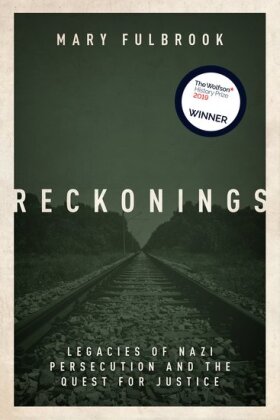
Mary Fulbrook's encompassing book attempts to expand our understanding, exploring the lives of individuals across a full spectrum of suffering and guilt, each one capturing one small part of the greater story. At its heart, Reckonings seeks to expose the disjuncture between official myths about "dealing with the past," on the one hand, and the extent to which the vast majority of Nazi perpetrators evaded justice, on the other. In the successor states to the Third Reich-East Germany, West Germany, and Austria - the attempts at justice varied widely in the years and decades after 1945. The Communist East German state pursued Nazi criminals and handed down severe sentences; West Germany, seeking to draw a line under the past, tended toward leniency and tolerance. Austria made nearly no reckoning at all until the 1980s, when news broke about UN Secretary General Kurt Waldheim's past. Following the various periods of trials and testimonials after the war, the shifting attitudes toward both perpetrators and survivors, this major book weighs heavily down on the scales of justice.
The Holocaust is not mere "history," and the memorial landscape covering it barely touches the surface; beneath it churns the maelstrom of reverberations of the Nazi era. Reckonings uses the stories of those who remained below the radar of public representations, outside the media spotlight, while also situating their experiences in the changing wider contexts and settings in which they sought to make sense of unprecedented suffering. Fulbrook uses the word "reckoning" in the widest possible sense, to evoke the consequences of violence on those directly involved, but also on those affected indirectly, and how its effects have expanded almost infinitely across place and time.