






Diese Website verwendet Cookies und ähnliche Technologien. Dabei handelt es sich um kleine Textdateien, die auf eurem Computer gespeichert und ausgelesen werden. Indem ihr auf "Alles akzeptieren" klickt, stimmt ihr der Verarbeitung von Daten, der Erstellung und Verarbeitung von individuellen Nutzungsprofilen über Websites und über Partner und Geräte hinweg sowie der Übermittlung eurer Daten an Drittanbieter zu, die eure Daten teilweise in Ländern außerhalb der Europäischen Union verarbeiten (GDPR Art. 49). Einzelheiten hierzu findet ihr in den Datenschutzhinweisen. Die Daten werden für Analysen und für eigene Zwecke Dritter verwendet. Weitere Informationen, auch über die Datenverarbeitung durch Drittanbieter und die Möglichkeit des Widerrufs, findet ihr in den Einstellungen und in unseren Datenschutzhinweisen. Hier könnt ihr mit den notwendigen Tools fortfahren.
- Verlag: Hatje Cantz Verlag
- Autor: Manuela Husemann
- Artikel-Nr.: KNV86790358
- ISBN: 9783775748056
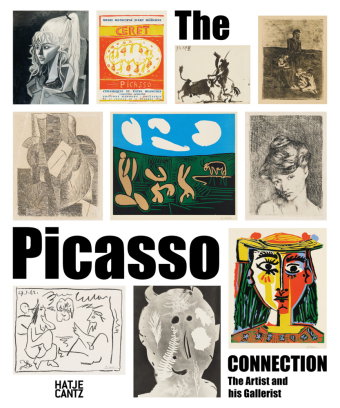
Without a doubt, Picasso is one of the most important and versatile artistic personalities of the twentieth century. But how does a body of work become so successful, and how does it wind up in major collections, museums, and exhibitions? Not infrequently, it is the courage of individuals who recognize genius in the works and advocate for them in the face of conservatism and criticism. In Picasso's case, this role in Germany fell to the Bremen art dealer Michael Hertz. It was his commitment in the post-war period that resulted not only in the museumization of the artist after the Second World War, but that also greatly benefited Kunsthalle Bremen, which has one of the most extensive collections of the artist's prints. This volume brings together the outstanding printworks, including lithographs, linocuts, and book illustrations. Picasso's oeuvre of prints can be regarded as a fascinating collection, in which can be read the triumph of the affordable medium in post-war Germany, as well as the dealer's strong commitment.
PABLO PICASSO (1881-1973) is regarded as the epitome of the twentieth-century artist. In addition to his paintings and sculptures, his graphic works also enjoy special fame.
MICHAEL HERTZ (1912-1987) made a name for himself in the post-war period as an art dealer. Through his contacts to the French art scene, he encountered the work of Picasso and became the exclusive representative for his printworks in Germany.