






Diese Website verwendet Cookies und ähnliche Technologien. Dabei handelt es sich um kleine Textdateien, die auf eurem Computer gespeichert und ausgelesen werden. Indem ihr auf "Alles akzeptieren" klickt, stimmt ihr der Verarbeitung von Daten, der Erstellung und Verarbeitung von individuellen Nutzungsprofilen über Websites und über Partner und Geräte hinweg sowie der Übermittlung eurer Daten an Drittanbieter zu, die eure Daten teilweise in Ländern außerhalb der Europäischen Union verarbeiten (GDPR Art. 49). Einzelheiten hierzu findet ihr in den Datenschutzhinweisen. Die Daten werden für Analysen und für eigene Zwecke Dritter verwendet. Weitere Informationen, auch über die Datenverarbeitung durch Drittanbieter und die Möglichkeit des Widerrufs, findet ihr in den Einstellungen und in unseren Datenschutzhinweisen. Hier könnt ihr mit den notwendigen Tools fortfahren.
- Verlag: Wiley & Sons
- Autor: Ross Anderson
- Artikel-Nr.: KNV87267543
- ISBN: 9781119642787
Now that there's software in everything, how can you make anything secure? Understand how to engineer dependable systems with this newly updated classic
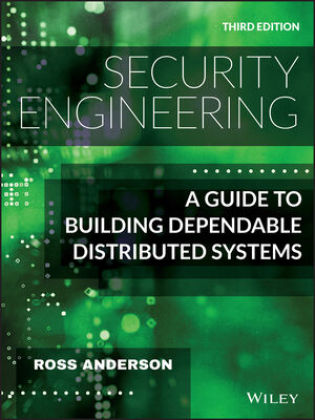
In Security Engineering: A Guide to Building Dependable Distributed Systems, Third Edition Cambridge University professor Ross Anderson updates his classic textbook and teaches readers how to design, implement, and test systems to withstand both error and attack.
This book became a best-seller in 2001 and helped establish the discipline of security engineering. By the second edition in 2008, underground dark markets had let the bad guys specialize and scale up; attacks were increasingly on users rather than on technology. The book repeated its success by showing how security engineers can focus on usability.
Now the third edition brings it up to date for 2020. As people now go online from phones more than laptops, most servers are in the cloud, online advertising drives the Internet and social networks have taken over much human interaction, many patterns of crime and abuse are the same, but the methods have evolved. Ross Anderson explores what security engineering means in 2020, including:
- How the basic elements of cryptography, protocols, and access control translate to the new world of phones, cloud services, social media and the Internet of Things
- Who the attackers are - from nation states and business competitors through criminal gangs to stalkers and playground bullies
- What they do - from phishing and carding through SIM swapping and software exploits to DDoS and fake news
- Security psychology, from privacy through ease-of-use to deception
- The economics of security and dependability - why companies build vulnerable systems and governments look the other way
- How dozens of industries went online - well or badly
- How to manage security and safety engineering in a world of agile development - from reliability engineering to DevSecOps
The third edition of Security Engineering ends with a grand challenge: sustainable security. As we build ever more software and connectivity into safety-critical durable goods like cars and medical devices, how do we design systems we can maintain and defend for decades? Or will everything in the world need monthly software upgrades, and become unsafe once they stop?