






Diese Website verwendet Cookies und ähnliche Technologien. Dabei handelt es sich um kleine Textdateien, die auf eurem Computer gespeichert und ausgelesen werden. Indem ihr auf "Alles akzeptieren" klickt, stimmt ihr der Verarbeitung von Daten, der Erstellung und Verarbeitung von individuellen Nutzungsprofilen über Websites und über Partner und Geräte hinweg sowie der Übermittlung eurer Daten an Drittanbieter zu, die eure Daten teilweise in Ländern außerhalb der Europäischen Union verarbeiten (GDPR Art. 49). Einzelheiten hierzu findet ihr in den Datenschutzhinweisen. Die Daten werden für Analysen und für eigene Zwecke Dritter verwendet. Weitere Informationen, auch über die Datenverarbeitung durch Drittanbieter und die Möglichkeit des Widerrufs, findet ihr in den Einstellungen und in unseren Datenschutzhinweisen. Hier könnt ihr mit den notwendigen Tools fortfahren.
- Verlag: Delta Publishing/Klett
- Autor: Andreas Grundtvig
- Artikel-Nr.: KNV87801038
- ISBN: 9783125017429
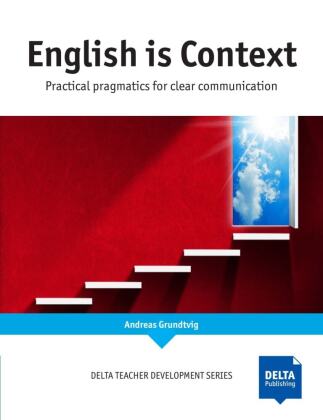
English is Context is as enjoyable to read as it will be enjoyable to teach. It is amusing yet authoritative; provocative yet without causing offence; whimsical yet well-documented; personal yet eminently practical.
Part A offers theory: taking the reader on a journey across the history of language in context - from the author's very personal perspective - through a history of language through the ages, quoting the most wide-ranging and often surprising of references ... to the specifics of the language classroom.
Part B offers activities: initiating the learner in the secret of pragmatics through a first set of short, introductory, practical activities; a second set that investigates the importance of context in the language we live; and four further chapters that delve deeper into the question of how we speak, and the ways we say what we may - or may not! - mean.
Part C offers reflection: resuming the perspective of the author at the end of Part A, it concentrates on the language classroom and reflects on pragmatics in regard to the teacher, to the learner and, ultimately, to both together - in such a way that a much greater, shared, understanding and incipient control of pragmatic competence is successfully achieved.