






Diese Website verwendet Cookies und ähnliche Technologien. Dabei handelt es sich um kleine Textdateien, die auf eurem Computer gespeichert und ausgelesen werden. Indem ihr auf "Alles akzeptieren" klickt, stimmt ihr der Verarbeitung von Daten, der Erstellung und Verarbeitung von individuellen Nutzungsprofilen über Websites und über Partner und Geräte hinweg sowie der Übermittlung eurer Daten an Drittanbieter zu, die eure Daten teilweise in Ländern außerhalb der Europäischen Union verarbeiten (GDPR Art. 49). Einzelheiten hierzu findet ihr in den Datenschutzhinweisen. Die Daten werden für Analysen und für eigene Zwecke Dritter verwendet. Weitere Informationen, auch über die Datenverarbeitung durch Drittanbieter und die Möglichkeit des Widerrufs, findet ihr in den Einstellungen und in unseren Datenschutzhinweisen. Hier könnt ihr mit den notwendigen Tools fortfahren.
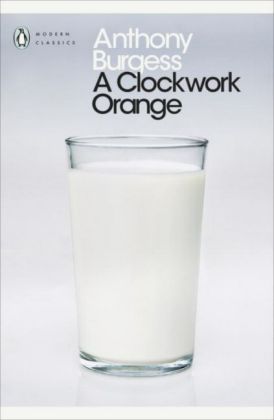
- Verlag: Penguin Books UK
- Autor: Anthony Burgess
- Artikel-Nr.: KNV30822864
- ISBN: 9780141182605
'I do not know of any other writer who has done as much with language ... a very funny book' William S. Burroughs
Fifteen-year-old Alex doesn't just like ultra-violence - he also enjoys rape, drugs and Beethoven's ninth. He and his gang of droogs rampage through a dystopian future, hunting for terrible thrills. But when Alex finds himself at the mercy of the state and subject to the ministrations of Dr Brodsky, and the mind-altering treatment of the Ludovico Technique, he discovers that fun is no longer the order of the day. The basis for Stanley Kubrick's notorious 1971 film, A Clockwork Orange is both a virtuoso performance from an electrifying prose stylist and a serious exploration of the morality of free will.
In his introduction, Blake Morrison situates A Clockwork Orange within the context of Anthony Burgess's many other works, explores the author's unhappiness with the Stanley Kubrick film version, analyses the composition of the Nadsat argot spoken by Alex and his droogs, and examines the influences on Burgess's unique, eternally original style.
With an Introduction by Blake Morrison