






Diese Website verwendet Cookies und ähnliche Technologien. Dabei handelt es sich um kleine Textdateien, die auf eurem Computer gespeichert und ausgelesen werden. Indem ihr auf "Alles akzeptieren" klickt, stimmt ihr der Verarbeitung von Daten, der Erstellung und Verarbeitung von individuellen Nutzungsprofilen über Websites und über Partner und Geräte hinweg sowie der Übermittlung eurer Daten an Drittanbieter zu, die eure Daten teilweise in Ländern außerhalb der Europäischen Union verarbeiten (GDPR Art. 49). Einzelheiten hierzu findet ihr in den Datenschutzhinweisen. Die Daten werden für Analysen und für eigene Zwecke Dritter verwendet. Weitere Informationen, auch über die Datenverarbeitung durch Drittanbieter und die Möglichkeit des Widerrufs, findet ihr in den Einstellungen und in unseren Datenschutzhinweisen. Hier könnt ihr mit den notwendigen Tools fortfahren.
- Verlag: Oxford University Press
- Autor: Andrew Walton
- Artikel-Nr.: KNV89127364
- ISBN: 9780198783275
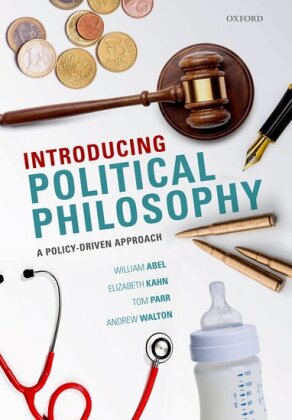
The opening chapter familiarises students with the aims and methods of political philosophy. It explains the tools required to practice the discipline, and discusses how to apply these to political arguments. Each of the fifteen subsequent chapters focuses on a distinct area of public policy, such as affirmative action, humanitarian intervention, immigration, and parental leave. The authors introduce students to the moral questions that lie at the heart of these political disputes, as well as to some of the relevant academic literature.
The authors believe that the best way to learn about political philosophy is to see it in action. By arguing for a position in each chapter and defending it against criticisms, they demonstrate to students how political philosophy can inform our analysis of public policy.
Introducing Political Philosophy is available for students and institutions to purchase in a variety of formats, and is supported by online resources.
The e-book offers a mobile experience and convenient access along with hyperlinks a list of web-links, and self-test questions, helping to test your knowledge and understanding of policy areas, and the philosophical arguments that influence them: www.oxfordtextbooks.co.uk/ebooks.
· Student resources: a curated list of websites help you to deepen your knowledge of policy areas, and self-test questions help you to critically evaluate key points from each chapter.
· Lecturer resources include: seminar activities to encourage student engagement, discussion and debate; guidance on using the teaching activities; a teaching guide explaining how to get the most out of the book's inside-out approach; and customisable PowerPoint slides on key topics, thinkers, and concepts to aid effective teaching preparation.