






Diese Website verwendet Cookies und ähnliche Technologien. Dabei handelt es sich um kleine Textdateien, die auf eurem Computer gespeichert und ausgelesen werden. Indem ihr auf "Alles akzeptieren" klickt, stimmt ihr der Verarbeitung von Daten, der Erstellung und Verarbeitung von individuellen Nutzungsprofilen über Websites und über Partner und Geräte hinweg sowie der Übermittlung eurer Daten an Drittanbieter zu, die eure Daten teilweise in Ländern außerhalb der Europäischen Union verarbeiten (GDPR Art. 49). Einzelheiten hierzu findet ihr in den Datenschutzhinweisen. Die Daten werden für Analysen und für eigene Zwecke Dritter verwendet. Weitere Informationen, auch über die Datenverarbeitung durch Drittanbieter und die Möglichkeit des Widerrufs, findet ihr in den Einstellungen und in unseren Datenschutzhinweisen. Hier könnt ihr mit den notwendigen Tools fortfahren.
- Verlag: Penguin Books UK
- Autor: David Goodhart
- Artikel-Nr.: KNV89062908
- ISBN: 9780141990415
A FINANCIAL TIMES AND TELEGRAPH BOOK OF THE YEAR 2020
The acclaimed new book from the celebrated author of The Road to Somewhere
'Brilliant, will become a classic' Daily Telegraph
'Utterly compelling ... one of the most important intellectuals in the country, if not Europe' Sunday Times
The coronavirus pandemic taught us something we ought already to have known: that care workers, supermarket shelf-stackers, delivery drivers and cleaners are doing essential work that keeps us all alive, fed and cared for. Until recently much of this work was regarded as menial by the the same society that now lauds them as 'key workers'. Why are they so undervalued?
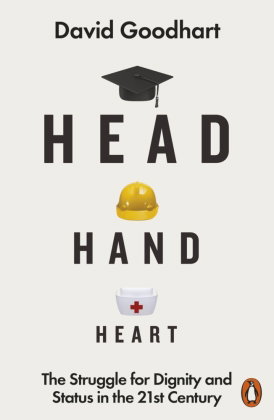
In this timely and original analysis, David Goodhart divides human aptitudes into three: Head (cognitive), Hand (manual and craft) and Heart (caring, emotional). It's common sense that a good society needs to recognise the value of all three, but in recent decades they have got badly out of kilter. Cognitive ability has become the gold standard of human esteem. The cognitive class now shapes society largely in its own interests, by prioritizing the knowledge economy, ever-expanding higher education and shaping the very idea of a successful life. To put it bluntly: smart people have become too powerful.
Head, Hand, Heart tells the story of the cognitive takeover that has gathered pace over the past forty years. As recently as the 1970s most people left school without qualifications, but now 40 per cent of all jobs are graduate-only. A good society must re-imagine the meaning of skilled work, so that people who work with their hands and hearts are valued alongside workers who manipulate data. Our societies need to spread status more widely, and provide meaning and value for people who cannot, or do not want to, achieve in the classroom and the professions. This is the story of the central struggle for status and dignity in the twenty-first century.