






Diese Website verwendet Cookies und ähnliche Technologien. Dabei handelt es sich um kleine Textdateien, die auf eurem Computer gespeichert und ausgelesen werden. Indem ihr auf "Alles akzeptieren" klickt, stimmt ihr der Verarbeitung von Daten, der Erstellung und Verarbeitung von individuellen Nutzungsprofilen über Websites und über Partner und Geräte hinweg sowie der Übermittlung eurer Daten an Drittanbieter zu, die eure Daten teilweise in Ländern außerhalb der Europäischen Union verarbeiten (GDPR Art. 49). Einzelheiten hierzu findet ihr in den Datenschutzhinweisen. Die Daten werden für Analysen und für eigene Zwecke Dritter verwendet. Weitere Informationen, auch über die Datenverarbeitung durch Drittanbieter und die Möglichkeit des Widerrufs, findet ihr in den Einstellungen und in unseren Datenschutzhinweisen. Hier könnt ihr mit den notwendigen Tools fortfahren.
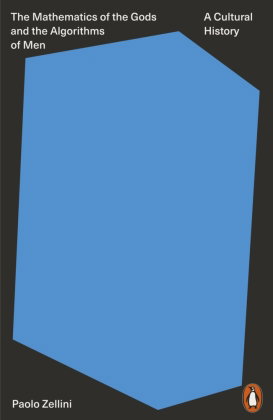
- Verlag: Penguin Books UK
- Autor: Paolo Zellini
- Artikel-Nr.: KNV89062816
- ISBN: 9780141986487
Is mathematics a discovery or an invention? Do numbers truly exist? What sort of reality do formulas describe?
The complexity of mathematics - its abstract rules and obscure symbols - can seem very distant from the everyday. There are those things that are real and present, it is supposed, and then there are mathematical concepts: creations of our mind, mysterious tools for those unengaged with the world. Yet, from its most remote history and deepest purpose, mathematics has served not just as a way to understand and order, but also as a foundation for the reality it describes.
In this elegant book, mathematician and philosopher Paolo Zellini offers a brief cultural and intellectual history of mathematics, ranging widely from the paradoxes of ancient Greece to the sacred altars of India, from Mesopotamian calculus to our own contemporary obsession with algorithms.
Masterful and illuminating, The Mathematics of the Gods and the Algorithms of Men transforms our understanding of mathematical thinking, showing that it is inextricably linked with the philosophical and the religious as well as the mundane - and, indeed, with our own very human experience of the universe.