






Diese Website verwendet Cookies und ähnliche Technologien. Dabei handelt es sich um kleine Textdateien, die auf eurem Computer gespeichert und ausgelesen werden. Indem ihr auf "Alles akzeptieren" klickt, stimmt ihr der Verarbeitung von Daten, der Erstellung und Verarbeitung von individuellen Nutzungsprofilen über Websites und über Partner und Geräte hinweg sowie der Übermittlung eurer Daten an Drittanbieter zu, die eure Daten teilweise in Ländern außerhalb der Europäischen Union verarbeiten (GDPR Art. 49). Einzelheiten hierzu findet ihr in den Datenschutzhinweisen. Die Daten werden für Analysen und für eigene Zwecke Dritter verwendet. Weitere Informationen, auch über die Datenverarbeitung durch Drittanbieter und die Möglichkeit des Widerrufs, findet ihr in den Einstellungen und in unseren Datenschutzhinweisen. Hier könnt ihr mit den notwendigen Tools fortfahren.
- Verlag: Springer, Berlin
- Autor: Anthony C Hackney
- Artikel-Nr.: KNV89639204
- ISBN: 9783030333782
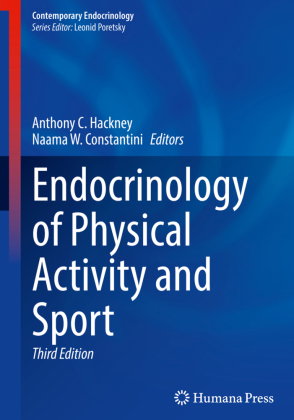
Now in its fully revised and expanded third edition, this comprehensive text represents a compilation of the critical endocrinology topics in the areas of sports medicine, kinesiology and exercise science, written by leading experts in the field.
As in previous editions, the focus here is on the critical issues involved in understanding human endocrinology and hormonal workings with regards to physical activity, exercise and sport and how such workings impact the full range of medical conditions, overall health and physiological adaptation. Chapters included discuss the effect of exercise on the HPA axis, the GH-IGF-1 axis, thyroid function, diabetes, and the male and female reproductive systems, among other topics. Additional chapters present the current evidence on circadian endocrine physiology, exercise in older adults, exercise and hormone regulation in weight control, and the effects of overtraining in sports. Chapters brand new to this edition present the role of hormones in muscle hypertrophy, the effect of exercise on hormones in metabolic syndrome patients, how exercise impacts appetite-regulating hormones in clinical populations, and the relative energy deficiency in sport (RED-S) condition.