






Diese Website verwendet Cookies und ähnliche Technologien. Dabei handelt es sich um kleine Textdateien, die auf eurem Computer gespeichert und ausgelesen werden. Indem ihr auf "Alles akzeptieren" klickt, stimmt ihr der Verarbeitung von Daten, der Erstellung und Verarbeitung von individuellen Nutzungsprofilen über Websites und über Partner und Geräte hinweg sowie der Übermittlung eurer Daten an Drittanbieter zu, die eure Daten teilweise in Ländern außerhalb der Europäischen Union verarbeiten (GDPR Art. 49). Einzelheiten hierzu findet ihr in den Datenschutzhinweisen. Die Daten werden für Analysen und für eigene Zwecke Dritter verwendet. Weitere Informationen, auch über die Datenverarbeitung durch Drittanbieter und die Möglichkeit des Widerrufs, findet ihr in den Einstellungen und in unseren Datenschutzhinweisen. Hier könnt ihr mit den notwendigen Tools fortfahren.
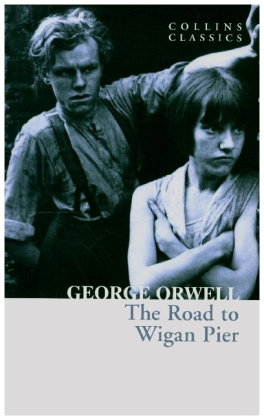
- Verlag: HarperCollins UK
- Autor: George Orwell
- Artikel-Nr.: KNV89340724
- ISBN: 9780008443825
HarperCollins is proud to present our range of timeless literary classics.
If there is one man to whom I do feel myself inferior, it is a coalminer.
In the mid-1930s, George Orwell was given an assignment from his publisher - to write a book about unemployment and social conditions in the economically depressed north of England. Revolutionary for its time, The Road to Wigan Pier documents Orwell's stint in towns likes Barnsley, Sheffield and Wigan in 1936, where he met and observed working-class people living in the bleak industrial heartlands of Yorkshire and Lancashire.
Orwell graphically and emphatically describes the hardships of ordinary people living in cramped slum housing, working in dangerous mines and growing hungry through malnutrition and social injustice. It is an honest, gripping and humane study that also looks at socialism as a solution to the problems facing working-class northerners - something many readers at the time were uncomfortable discussing.
The Road to Wigan Pier cemented ideas that would be found in Orwell's later works, and remains a powerful portrait of poverty, injustice and class divisions in Britain to this day.