






Diese Website verwendet Cookies und ähnliche Technologien. Dabei handelt es sich um kleine Textdateien, die auf eurem Computer gespeichert und ausgelesen werden. Indem ihr auf "Alles akzeptieren" klickt, stimmt ihr der Verarbeitung von Daten, der Erstellung und Verarbeitung von individuellen Nutzungsprofilen über Websites und über Partner und Geräte hinweg sowie der Übermittlung eurer Daten an Drittanbieter zu, die eure Daten teilweise in Ländern außerhalb der Europäischen Union verarbeiten (GDPR Art. 49). Einzelheiten hierzu findet ihr in den Datenschutzhinweisen. Die Daten werden für Analysen und für eigene Zwecke Dritter verwendet. Weitere Informationen, auch über die Datenverarbeitung durch Drittanbieter und die Möglichkeit des Widerrufs, findet ihr in den Einstellungen und in unseren Datenschutzhinweisen. Hier könnt ihr mit den notwendigen Tools fortfahren.
- Verlag: HarperCollins UK
- Autor: Mark Stevens
- Artikel-Nr.: KNV89338568
- ISBN: 9780007298426
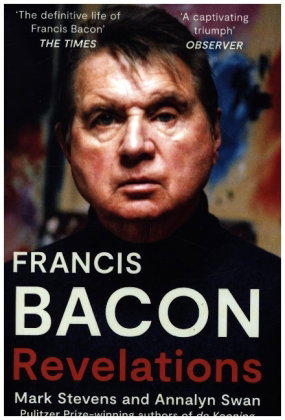
'Must surely be the definitive life of Francis Bacon ... A biography that no Bacon fan - or indeed foe - can afford to overlook ... Mesmerising' THE TIMES
'A magnificent triumph ... I was captivated by every line' OBSERVER
A decade in the making, based upon hundreds of interviews and extensive new material, Pulitzer Prize winners Mark Stevens and Annalyn Swan have written a startlingly original portrait - rich, complex, and subtle - of a commanding modern figure.
Bacon concealed many important aspects of his life. He described himself as an asthmatic child in Ireland with foxhunting parents and a tyrannical father, but he was also rescued by a series of formidable women - women who in this biography emerge in their own right. He was never just a dissolute young man but was also a passionate reader, largely self-taught. Early on, influenced by Eileen Gray, he became a hard-working and ambitious designer, a brief career explored here in detail for the first time. He dreamed of remaking the modern room.
Bacon worked no less hard or ambitiously as a painter, at first with little success. Throughout the 1930s and early '40s he suffered ongoing failures, growing isolated and often ill. His health issues throughout his life were far more significant than he revealed. Then came his astonishing breakthrough in 1944, with Three Studies for Figures at the Base of a Crucifixion. In the following decades, he emerged as one of the great iconoclasts and bon vivants of his time, a Wildean figure whom one friend called 'a terrific grandee.' Bacon was typically celebrated as a sexual adventurer who liked rough trade, but he never stopped longing for a serious committed relationship, however painful. He continued to make disturbing images of the strangeness within, but developed into a more varied artist than has been recognised, creating in particular an extraordinary series of self-portraits. He was an artist who believed in chance and paradox: the iconoclast eventually became an icon.
This is a story, deeply researched and masterfully told, of a sickly boy who became one of the great figures of his time. The twentieth century does not know itself without Bacon.