






Diese Website verwendet Cookies und ähnliche Technologien. Dabei handelt es sich um kleine Textdateien, die auf eurem Computer gespeichert und ausgelesen werden. Indem ihr auf "Alles akzeptieren" klickt, stimmt ihr der Verarbeitung von Daten, der Erstellung und Verarbeitung von individuellen Nutzungsprofilen über Websites und über Partner und Geräte hinweg sowie der Übermittlung eurer Daten an Drittanbieter zu, die eure Daten teilweise in Ländern außerhalb der Europäischen Union verarbeiten (GDPR Art. 49). Einzelheiten hierzu findet ihr in den Datenschutzhinweisen. Die Daten werden für Analysen und für eigene Zwecke Dritter verwendet. Weitere Informationen, auch über die Datenverarbeitung durch Drittanbieter und die Möglichkeit des Widerrufs, findet ihr in den Einstellungen und in unseren Datenschutzhinweisen. Hier könnt ihr mit den notwendigen Tools fortfahren.
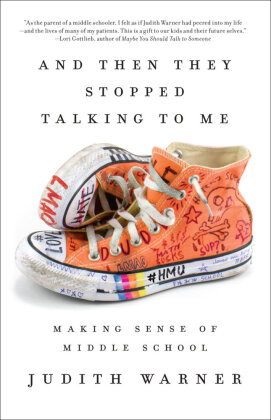
- Verlag: Penguin Random House
- Autor: Judith Warner
- Artikel-Nr.: KNV89897134
- ISBN: 9781101905890
As the parent of a middle schooler, I felt as if Judith Warner had peered into my life and the lives of many of my patients. This is a gift to our kids and their future selves. Lori Gottlieb, author of Maybe You Should Talk to Someone
The French have a name for the uniquely hellish years between elementary school and high school: l âge ingrat, or the ugly age. Characterized by a perfect storm of developmental changes physical, psychological, and social the middle school years are a time of great distress for children and parents alike, marked by hurt, isolation, exclusion, competition, anxiety, and often outright cruelty. Some of this is inevitable; there are intrinsic challenges to early adolescence. But these years are harder than they need to be, and Judith Warner believes that adults are complicit.
With deep insight and compassion, Warner walks us through a new understanding of the role that middle school plays in all our lives. She argues that today s helicopter parents are overly concerned with status and achievement in some ways a residual effect of their own middle school experiences and that this worsens the self-consciousness, self-absorption, and social sorting so typical of early adolescence.
Tracing a century of research on middle childhood and bringing together the voices of social scientists, psychologists, educators, and parents, Warner s book shows how adults can be moral role models for children, making them more empathetic, caring, and resilient. She encourages us to start treating middle schoolers as the complex people they are, holding them to high standards of kindness, and helping them see one another as more than jocks and mean girls, nerds and sluts.
Part cultural critique and part call to action, this essential book unpacks one of life s most formative periods and shows how we can help our children not only survive it but thrive.