






Diese Website verwendet Cookies und ähnliche Technologien. Dabei handelt es sich um kleine Textdateien, die auf eurem Computer gespeichert und ausgelesen werden. Indem ihr auf "Alles akzeptieren" klickt, stimmt ihr der Verarbeitung von Daten, der Erstellung und Verarbeitung von individuellen Nutzungsprofilen über Websites und über Partner und Geräte hinweg sowie der Übermittlung eurer Daten an Drittanbieter zu, die eure Daten teilweise in Ländern außerhalb der Europäischen Union verarbeiten (GDPR Art. 49). Einzelheiten hierzu findet ihr in den Datenschutzhinweisen. Die Daten werden für Analysen und für eigene Zwecke Dritter verwendet. Weitere Informationen, auch über die Datenverarbeitung durch Drittanbieter und die Möglichkeit des Widerrufs, findet ihr in den Einstellungen und in unseren Datenschutzhinweisen. Hier könnt ihr mit den notwendigen Tools fortfahren.
- Verlag: Macmillan Publishers International
- Autor: Jean-Claude Grumberg
- Artikel-Nr.: KNV90380538
- ISBN: 9781529019582
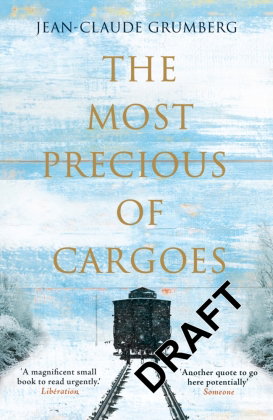
A haunting fable that tells a story of the Holocaust, and the remarkable acts of kindness which people are capable of.
'A magnificent small book to read urgently' - Libération
Once upon a time in an enormous forest there lived a poor woodcutter and his wife. Around them a war wages, and hunger is a constant companion. Yet every night, the woodcutter's wife prays for a child.
On a train crossing the forest, a Jewish father holds his twin children. His wife no longer has enough milk to feed them. In hopes of saving both their lives, he wraps his daughter in a shawl and gently throws her from the train.
While foraging for food, the woodcutter's wife finds a bundle, a baby girl wrapped in a shawl. She knows that this little girl will be pursued, but she cannot ignore this gift: she will accept the precious cargo, and raise her as her own. . .
Set against the horrors of the Holocaust and told in a fairytale style, Jean-Claude Grumberg's The Most Precious of Cargoes is a deeply moving fable about family and redemption. A story that reminds us that humanity can be found in the most inhumane of places.
Translated from French by Frank Wynne.