






Diese Website verwendet Cookies und ähnliche Technologien. Dabei handelt es sich um kleine Textdateien, die auf eurem Computer gespeichert und ausgelesen werden. Indem ihr auf "Alles akzeptieren" klickt, stimmt ihr der Verarbeitung von Daten, der Erstellung und Verarbeitung von individuellen Nutzungsprofilen über Websites und über Partner und Geräte hinweg sowie der Übermittlung eurer Daten an Drittanbieter zu, die eure Daten teilweise in Ländern außerhalb der Europäischen Union verarbeiten (GDPR Art. 49). Einzelheiten hierzu findet ihr in den Datenschutzhinweisen. Die Daten werden für Analysen und für eigene Zwecke Dritter verwendet. Weitere Informationen, auch über die Datenverarbeitung durch Drittanbieter und die Möglichkeit des Widerrufs, findet ihr in den Einstellungen und in unseren Datenschutzhinweisen. Hier könnt ihr mit den notwendigen Tools fortfahren.
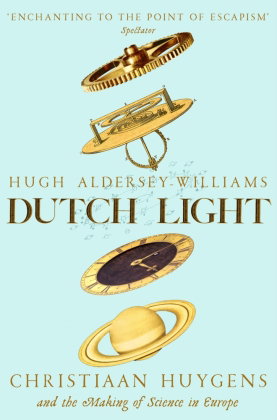
- Verlag: Macmillan Publishers International
- Autor: Hugh Aldersey-Williams
- Artikel-Nr.: KNV90380457
- ISBN: 9781509893355
'Enchanting to the point of escapism.' - Simon Ings, Spectator
'Hugh Aldersey-Williams rescues his subject from Newton's shadow, where he was been unjustly confined for over three hundred years.' - Literary Review
Filled with incident, discovery, and revelation, Dutch Light is a vivid account of Christiaan Huygens's remarkable life and career, but it is also nothing less than the story of the birth of modern science as we know it.
Europe's greatest scientist during the latter half of the seventeenth century, Christiaan Huygens was a true polymath. A towering figure in the fields of astronomy, optics, mechanics, and mathematics, many of his innovations in methodology, optics and timekeeping remain in use to this day. Among his many achievements, he developed the theory of light travelling as a wave, invented the mechanism for the pendulum clock, and discovered the rings of Saturn - via a telescope that he had also invented.
A man of fashion and culture, Christiaan came from a family of multi-talented individuals whose circle included not only leading figures of Dutch society, but also artists and philosophers such as Rembrandt, Locke and Descartes. The Huygens family and their contemporaries would become key actors in the Dutch Golden Age, a time of unprecedented intellectual expansion within the Netherlands. Set against a backdrop of worldwide religious and political turmoil, this febrile period was defined by danger, luxury and leisure, but also curiosity, purpose, and tremendous possibility.
Following in Huygens's footsteps as he navigates this era while shuttling opportunistically between countries and scientific disciplines, Hugh Aldersey-Williams builds a compelling case to reclaim Huygens from the margins of history and acknowledge him as one of our most important and influential scientific figures.