






Diese Website verwendet Cookies und ähnliche Technologien. Dabei handelt es sich um kleine Textdateien, die auf eurem Computer gespeichert und ausgelesen werden. Indem ihr auf "Alles akzeptieren" klickt, stimmt ihr der Verarbeitung von Daten, der Erstellung und Verarbeitung von individuellen Nutzungsprofilen über Websites und über Partner und Geräte hinweg sowie der Übermittlung eurer Daten an Drittanbieter zu, die eure Daten teilweise in Ländern außerhalb der Europäischen Union verarbeiten (GDPR Art. 49). Einzelheiten hierzu findet ihr in den Datenschutzhinweisen. Die Daten werden für Analysen und für eigene Zwecke Dritter verwendet. Weitere Informationen, auch über die Datenverarbeitung durch Drittanbieter und die Möglichkeit des Widerrufs, findet ihr in den Einstellungen und in unseren Datenschutzhinweisen. Hier könnt ihr mit den notwendigen Tools fortfahren.
- Verlag: Bloomsbury Academic
- Autor: Nina Jankowicz
- Artikel-Nr.: KNV90482451
- ISBN: 9780755642083
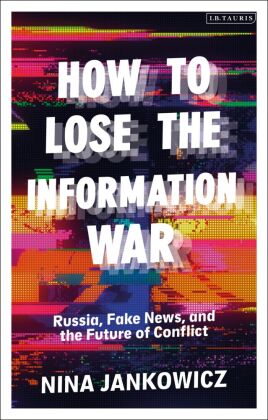
Since the start of the Trump era, the United States and the Western world has finally begun to wake up to the threat of online warfare and the attacks from Russia, who flood social media with disinformation, and circulate false and misleading information to fuel fake narratives and make the case for illegal warfare. The question no one seems to be able to answer is: what can the West do about it?
Central and Eastern European states, including Ukraine and Poland, however, have been aware of the threat for years. Nina Jankowicz has advised these governments on the front lines of the information war. The lessons she learnt from that fight, and from her attempts to get US congress to act, make for essential reading.
How to Lose the Information War takes the reader on a journey through five Western governments' responses to Russian information warfare tactics - all of which have failed. She journeys into the campaigns the Russian operatives run, and shows how we can better understand the motivations behind these attacks and how to beat them. Above all, this book shows what is at stake: the future of civil discourse and democracy, and the value of truth itself.