






Diese Website verwendet Cookies und ähnliche Technologien. Dabei handelt es sich um kleine Textdateien, die auf eurem Computer gespeichert und ausgelesen werden. Indem ihr auf "Alles akzeptieren" klickt, stimmt ihr der Verarbeitung von Daten, der Erstellung und Verarbeitung von individuellen Nutzungsprofilen über Websites und über Partner und Geräte hinweg sowie der Übermittlung eurer Daten an Drittanbieter zu, die eure Daten teilweise in Ländern außerhalb der Europäischen Union verarbeiten (GDPR Art. 49). Einzelheiten hierzu findet ihr in den Datenschutzhinweisen. Die Daten werden für Analysen und für eigene Zwecke Dritter verwendet. Weitere Informationen, auch über die Datenverarbeitung durch Drittanbieter und die Möglichkeit des Widerrufs, findet ihr in den Einstellungen und in unseren Datenschutzhinweisen. Hier könnt ihr mit den notwendigen Tools fortfahren.
- Verlag: diaphanes
- Autor: Susanne Witzgall
- Artikel-Nr.: KNV90894874
- ISBN: 9783035804638
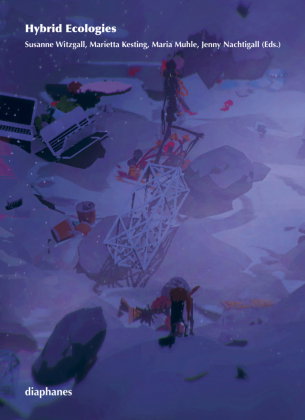
The notion of ecology not only figures centrally in current debates around climate change, but also traverses contemporary discourses in the arts, the humanities, and the social and techno sciences. In its present reformulation it refers to the multi-layered and multi-dimensional nexus of reciprocities between living processes, technological and media practices, i.e. to the complex relations of human and nonhuman agents. The book Hybrid Ecologies understands ecology as an ambivalent notion, whose multivalence opens up new fields of action and yet, thanks precisely to this openness and vast applicability, at the same time raises questions not least concerning its genealogy. The interdisciplinary contributions seek to explore the political and social effects that a rethinking of community in ecological and thus also in biopolitical terms may provoke, and which consequences the contemporary notion of ecology might entail for artistic and design practices in particular. The present publication is the result of the fifth annual program of the cx centre for interdisciplinary studies, which was conceived in cooperation with the Chair of Philosophy | Aesthetic Theory at the Academy of Fine Arts in Munich.