






Diese Website verwendet Cookies und ähnliche Technologien. Dabei handelt es sich um kleine Textdateien, die auf eurem Computer gespeichert und ausgelesen werden. Indem ihr auf "Alles akzeptieren" klickt, stimmt ihr der Verarbeitung von Daten, der Erstellung und Verarbeitung von individuellen Nutzungsprofilen über Websites und über Partner und Geräte hinweg sowie der Übermittlung eurer Daten an Drittanbieter zu, die eure Daten teilweise in Ländern außerhalb der Europäischen Union verarbeiten (GDPR Art. 49). Einzelheiten hierzu findet ihr in den Datenschutzhinweisen. Die Daten werden für Analysen und für eigene Zwecke Dritter verwendet. Weitere Informationen, auch über die Datenverarbeitung durch Drittanbieter und die Möglichkeit des Widerrufs, findet ihr in den Einstellungen und in unseren Datenschutzhinweisen. Hier könnt ihr mit den notwendigen Tools fortfahren.
- Verlag: Hatje Cantz Verlag
- Autor: Verena Dengler
- Artikel-Nr.: KNV91368613
- ISBN: 9783775750882
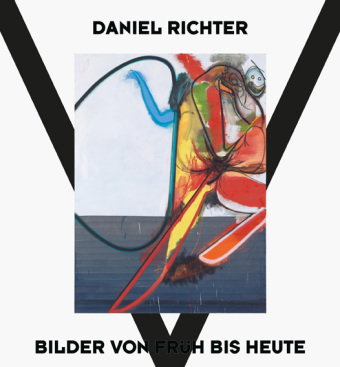
While German painting of the postwar period mostly concerned itself with coming to terms with the past and presenting it in gestures ranging from the heroic to the ironic, Daniel Richter focuses on positioning himself in the present. Time and again he devises new ways of being "modern" in a medium that has long been labeled old-fashioned. His pictures consistently challenge the spectator through their painterly and contextually excessive demands, but they do not lecture on moral issues. For the first time, Eva Meyer-Hermann traces the chronological development of Richter's oeuvre across more than 200 examples of his work. The turns from abstraction to figuration and back again that until now have been described as abrupt, prove on closer examination to be a logical consequence and a sign of conscious artistic action.
DANIEL RICHTER (*1962, Eutin, Schleswig-Holstein) has been one of the most significant and internationally renowned painters of his generation for more than twenty years. His beginnings in the autonomous left-wing underground and studies with Werner Büttner at the Hochschule für bildenden Künste in Hamburg contributed to his reputation, as has his eloquent public presence.