






Diese Website verwendet Cookies und ähnliche Technologien. Dabei handelt es sich um kleine Textdateien, die auf eurem Computer gespeichert und ausgelesen werden. Indem ihr auf "Alles akzeptieren" klickt, stimmt ihr der Verarbeitung von Daten, der Erstellung und Verarbeitung von individuellen Nutzungsprofilen über Websites und über Partner und Geräte hinweg sowie der Übermittlung eurer Daten an Drittanbieter zu, die eure Daten teilweise in Ländern außerhalb der Europäischen Union verarbeiten (GDPR Art. 49). Einzelheiten hierzu findet ihr in den Datenschutzhinweisen. Die Daten werden für Analysen und für eigene Zwecke Dritter verwendet. Weitere Informationen, auch über die Datenverarbeitung durch Drittanbieter und die Möglichkeit des Widerrufs, findet ihr in den Einstellungen und in unseren Datenschutzhinweisen. Hier könnt ihr mit den notwendigen Tools fortfahren.
- Verlag: Park Books
- Autor: Susannah C. Drake
- Artikel-Nr.: KNV91410218
- ISBN: 9783038602491
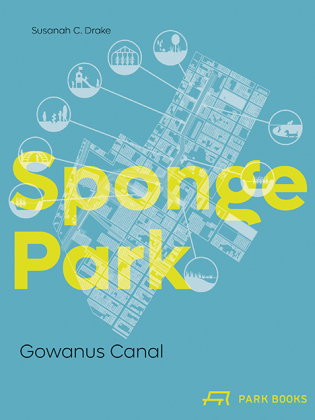
Before there were sponge cities, there were sponge parks. Brooklyn's Gowanus Canal is the site of the Sponge Park master plan and pilot projects, instigating a widespread movement toward greater urban permeability. Designed by Susannah Drake and her former Brooklyn-based firm DLANDstudio Architecture + Landscape Architecture, their execution was completed in 2016 and recognized with National AIA and ASLA Urban Design Awards as well as the inaugural Cooper Hewitt Smithsonian National Design Award for Climate Action in 2020.
The Gowanus Canal was the channelized reminder of a former freshwater creek and tidal marsh. Industrial use in the 19th and 20th centuries left a legacy of heavy pollution in the soil and water. Historic industrial buildings lined the canal, so that residential neighborhoods had scarce opportunity to access the water's edge. Today's Sponge Park is conceived as a series of public urban waterfront spaces that slow, absorb, and filter dirty surface water runoff to clean contaminated canal water, reduce combined sewer overflow, and add open space in a park-starved neighborhood. Revealing the form, distribution, and size of natural ecological patterns in relation to the shape and patterns of infrastructure, neighborhoods, and political jurisdictions were among key components of the design.
This book introduces the Sponge Park in great detail with photos, illustrations, plans, and diagrams. It demonstrates the concept's potential as a component of a larger vision for a new paradigm of coastal urbanism, upland adaptation, and right-of-way design in the 21st century. Sponge parks proactively address how to manage stormwater runoff from increasingly severe storm events, and reduce detrimental impacts. This work is a must-read for design students, architects, and academics as well as for elected officials, policy-makers, and community activists.