






Diese Website verwendet Cookies und ähnliche Technologien. Dabei handelt es sich um kleine Textdateien, die auf eurem Computer gespeichert und ausgelesen werden. Indem ihr auf "Alles akzeptieren" klickt, stimmt ihr der Verarbeitung von Daten, der Erstellung und Verarbeitung von individuellen Nutzungsprofilen über Websites und über Partner und Geräte hinweg sowie der Übermittlung eurer Daten an Drittanbieter zu, die eure Daten teilweise in Ländern außerhalb der Europäischen Union verarbeiten (GDPR Art. 49). Einzelheiten hierzu findet ihr in den Datenschutzhinweisen. Die Daten werden für Analysen und für eigene Zwecke Dritter verwendet. Weitere Informationen, auch über die Datenverarbeitung durch Drittanbieter und die Möglichkeit des Widerrufs, findet ihr in den Einstellungen und in unseren Datenschutzhinweisen. Hier könnt ihr mit den notwendigen Tools fortfahren.
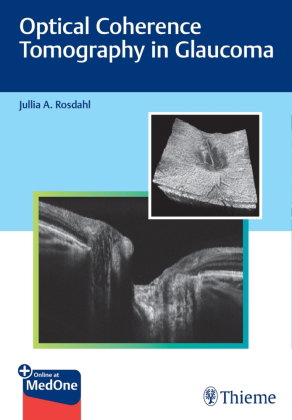
- Verlag: Thieme, Stuttgart
- Autor: Jullia Rosdahl
- Artikel-Nr.: KNV91553264
- ISBN: 9781684202478
A comprehensive and user-friendly guide on leveraging OCT for the management of glaucoma
Optical coherence tomography (OCT) is a noninvasive diagnostic imaging modality that enables ophthalmologists to visualize different layers of the optic nerve and retinal nerve fiber layer (RNFL) with astounding detail. Today, OCT is an instrumental tool for screening, diagnosing, and tracking the progression of glaucoma in patients. Optical Coherence Tomography in Glaucoma by renowned glaucoma specialist Jullia A. Rosdahl and esteemed contributors is a one-stop, unique resource that summarizes the clinical utility of this imaging technology, from basics to advanced analyses.
The book features 14 chapters, starting with introductory chapters that discuss development of OCT and its applications for visualizing the optic nerve and macula. In chapter 5, case studies illustrate OCT imaging of the optic nerve, RNFL, and macula in all stages of glaucoma, from patients at risk to those with mild, moderate, and severe diseases. The next chapters cover the intrinsic relationship between optic nerve structure and function, the use of structure function maps, and examples of their relationship, followed by a comparison of commonly used devices and a chapter on artifacts. Anterior segment OCT is covered next, followed by chapters covering special considerations in pediatric glaucomas and in patients with high refractive errors. The final chapters cover innovations in OCT on the horizon including OCT angiography, swept-source OCT, and artificial intelligence.
Key Highlights
- Illustrative case examples provide firsthand clinical insights on how OCT can be leveraged to inform glaucoma treatment.
- In-depth guidance on recognizing and managing artifacts including case examples and key technical steps to help prevent their occurrence.
- Pearls on the use of OCT for less common patient scenarios such as pediatric glaucomas and high refractive errors.
- Future OCT directions including angiography, swept-source, and the use of artificial intelligence.
This practical resource is essential reading for ophthalmology trainees and ophthalmologists new to using OCT for glaucoma. The pearls, examples, and novel topics in this book will also help experienced clinicians deepen their knowledge and increase confidence using OCT in daily practice.
This book includes complimentary access to a digital copy on https://medone.thieme.com.