






Diese Website verwendet Cookies und ähnliche Technologien. Dabei handelt es sich um kleine Textdateien, die auf eurem Computer gespeichert und ausgelesen werden. Indem ihr auf "Alles akzeptieren" klickt, stimmt ihr der Verarbeitung von Daten, der Erstellung und Verarbeitung von individuellen Nutzungsprofilen über Websites und über Partner und Geräte hinweg sowie der Übermittlung eurer Daten an Drittanbieter zu, die eure Daten teilweise in Ländern außerhalb der Europäischen Union verarbeiten (GDPR Art. 49). Einzelheiten hierzu findet ihr in den Datenschutzhinweisen. Die Daten werden für Analysen und für eigene Zwecke Dritter verwendet. Weitere Informationen, auch über die Datenverarbeitung durch Drittanbieter und die Möglichkeit des Widerrufs, findet ihr in den Einstellungen und in unseren Datenschutzhinweisen. Hier könnt ihr mit den notwendigen Tools fortfahren.
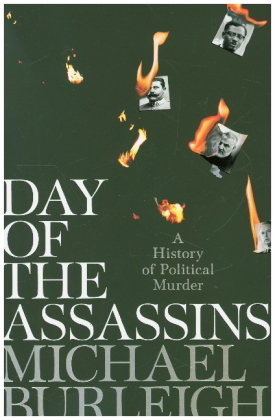
- Verlag: Macmillan Publishers International
- Autor: Michael Burleigh
- Artikel-Nr.: KNV91798372
- ISBN: 9781529030143
The traditional image of a political assassin is a lone wolf with a gun, aimed squarely at the head of those they wish to kill. But while there has been enormous speculation on what lay behind notorious individual political assassinations - from Gaius Julius Caesar to John F. Kennedy - the phenomenon itself has scarcely been examined as a special category of political violence, one not motivated by personal gain or vengeance.
Now, in Day of the Assassins, acclaimed historian Michael Burleigh explores the many facets of political assassination, explaining the role of historical precedent, why it is more frequent in certain types of society than others and asking if assassination can either bring about change, or prevent it, and whether, like a contagious disease, political murder can be catching. Focusing chiefly on the last century and a half, Burleigh takes readers to the Congo, India, Iran, Laos, Rwanda and South Africa and revisits notable assassinations in Europe, Russia, Israel and the United States.
Throughout, the assassins themselves are at the centre of the narrative, whether they were cool, well-trained professional killers, like the agents of the NKVD or the KGB, or men motivated by the politicization of their private miseries. Even some of those who were demonstrably mad had method in the madness and acted for comprehensible political motives.
Combining human drama, questions of political morality and the sheer randomness of events, Day of the Assassins is a riveting insight into the politics of violence.