






Diese Website verwendet Cookies und ähnliche Technologien. Dabei handelt es sich um kleine Textdateien, die auf eurem Computer gespeichert und ausgelesen werden. Indem ihr auf "Alles akzeptieren" klickt, stimmt ihr der Verarbeitung von Daten, der Erstellung und Verarbeitung von individuellen Nutzungsprofilen über Websites und über Partner und Geräte hinweg sowie der Übermittlung eurer Daten an Drittanbieter zu, die eure Daten teilweise in Ländern außerhalb der Europäischen Union verarbeiten (GDPR Art. 49). Einzelheiten hierzu findet ihr in den Datenschutzhinweisen. Die Daten werden für Analysen und für eigene Zwecke Dritter verwendet. Weitere Informationen, auch über die Datenverarbeitung durch Drittanbieter und die Möglichkeit des Widerrufs, findet ihr in den Einstellungen und in unseren Datenschutzhinweisen. Hier könnt ihr mit den notwendigen Tools fortfahren.
- Verlag: Hatje Cantz Verlag
- Autor: Charlotte Friling
- Artikel-Nr.: KNV92214877
- ISBN: 9783775751322
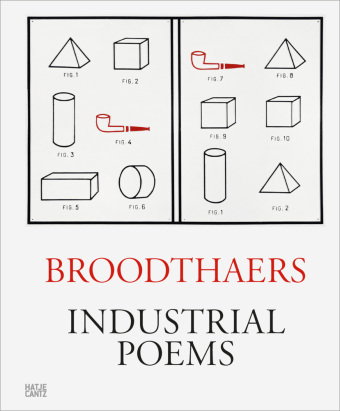
Marcel Broodthaers's work is characterized by a complex exploration of the relationship of text and image. This catalogue raisonné, prepared by WIELS and developed in close collaboration with the Marcel Broodthaers Succession, is the first to include all of the Belgian conceptual artist's industrial poems created between 1968 and 1972. Borrowing from the aesthetics of industrially manufactured plastic signs, Broodthaers's multi-layered, often enigmatic pictorial poems testify to his interest in the entanglements of language, punctuation, and symbols. In blurring the boundaries between word and image, painting and object, new levels of meaning are made visible. The index is supplemented by a collection of Broodthaers's drawings, writings and "open letters" as well as scholarly contributions that position the poems as a crucial group of works within the artist's oeuvre.
MARCEL BROODTHAERS (1924-1976) developed his poèmes industriels simultaneously to his seminal work, the Musée d'Art Moderne, Département des Aigles. They form an important element in the development of his fictional museum, a central work of institutional critique.