






Diese Website verwendet Cookies und ähnliche Technologien. Dabei handelt es sich um kleine Textdateien, die auf eurem Computer gespeichert und ausgelesen werden. Indem ihr auf "Alles akzeptieren" klickt, stimmt ihr der Verarbeitung von Daten, der Erstellung und Verarbeitung von individuellen Nutzungsprofilen über Websites und über Partner und Geräte hinweg sowie der Übermittlung eurer Daten an Drittanbieter zu, die eure Daten teilweise in Ländern außerhalb der Europäischen Union verarbeiten (GDPR Art. 49). Einzelheiten hierzu findet ihr in den Datenschutzhinweisen. Die Daten werden für Analysen und für eigene Zwecke Dritter verwendet. Weitere Informationen, auch über die Datenverarbeitung durch Drittanbieter und die Möglichkeit des Widerrufs, findet ihr in den Einstellungen und in unseren Datenschutzhinweisen. Hier könnt ihr mit den notwendigen Tools fortfahren.
- Verlag: Hatje Cantz Verlag
- Autor: Uwe Fleckner
- Artikel-Nr.: KNV92215054
- ISBN: 9783775751605
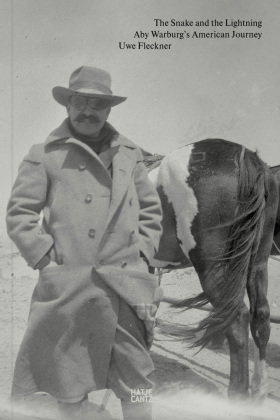
When Aby Warburg left for the United States in September 1895, it was not foreseeable that his search for the symbolic foundations of art would become one of the most fascinating events in the history of his field. Warburg's American journey lasted only months, and his stay in the Pueblo communities only a few weeks, but in 1923 he presented his findings in the groundbreaking lecture on the '"Snake Ritual". Using selected photographs, ethnologic drawings, and numerous documents, this story and picture book details a journey of discovery. It traverses a vast continent of research, showing Warburg's diverse interlocutors-from chiefs to missionaries-and especially his records of dances, ritual objects, and artworks full of symbolic representations. The documents are evidence of the emerging shift in Warburg's scholarly thinking, which would eventually lead to the cross-border cultural comparative methodology for which he is now held in worldwide esteem.
ABY WARBURG (1866-1929) founded modern pictorial science with his work. His main theme was the study of the afterlife of antiquity in the Renaissance, which he recorded in his iconic pictorial atlas Mnemosyne. His American voyage is evidence of how early Warburg already directed his gaze beyond the Western cultural context to explore the interplay of myths, images, and rites.UWE FLECKNER (*1961) is one of the acknowledged international experts on Warburg. Since 2004 he has been professor of art history at the University of Hamburg and a member of the board of directors of the Warburg House there. As co-editor of the collected works of Carl Einstein and Aby Warburg, he has produced numerous publications on the subject.