






Diese Website verwendet Cookies und ähnliche Technologien. Dabei handelt es sich um kleine Textdateien, die auf eurem Computer gespeichert und ausgelesen werden. Indem ihr auf "Alles akzeptieren" klickt, stimmt ihr der Verarbeitung von Daten, der Erstellung und Verarbeitung von individuellen Nutzungsprofilen über Websites und über Partner und Geräte hinweg sowie der Übermittlung eurer Daten an Drittanbieter zu, die eure Daten teilweise in Ländern außerhalb der Europäischen Union verarbeiten (GDPR Art. 49). Einzelheiten hierzu findet ihr in den Datenschutzhinweisen. Die Daten werden für Analysen und für eigene Zwecke Dritter verwendet. Weitere Informationen, auch über die Datenverarbeitung durch Drittanbieter und die Möglichkeit des Widerrufs, findet ihr in den Einstellungen und in unseren Datenschutzhinweisen. Hier könnt ihr mit den notwendigen Tools fortfahren.
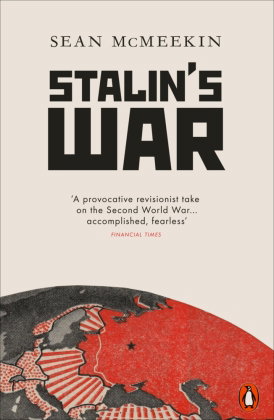
- Verlag: Penguin Books UK
- Autor: Sean McMeekin
- Artikel-Nr.: KNV95408870
- ISBN: 9780141989297
SHORTLISTED FOR THE DUKE OF WELLINGTON MEDAL AND THE GILDER LEHRMAN PRIZE FOR MILITARY HISTORY 2022
'A terrific read ... McMeekin is a superb writer' David Aaronovitch, The Times
'Gripping, authoritative, accessible and always bracingly revisionist' Simon Sebag Montefiore
'Impressive ... A new look at the conflict, which poses new questions and provides new and often unexpected answers to the old ones' Serhii Plokhy, The Guardian
In this remarkable, ground-breaking new book Sean McMeekin marks a generational shift in our view of Stalin as an ally in the Second World War. Stalin's only difference from Hitler, he argues, was that he was a successful murderous predator. With Hitler dead and the Third Reich in ruins, Stalin created an immense new Communist empire. Among his holdings were Czechoslovakia and Poland, the fates of which had first set the West against the Nazis and, of course, China and North Korea, the ramifications of which we still live with today.
Until Barbarossa wrought a public relations miracle, turning him into a plucky ally of the West, Stalin had murdered millions, subverted every norm of international behaviour, invaded as many countries as Hitler had, and taken great swathes of territory he would continue to keep. In the larger sense the global conflict grew out of not only German and Japanese aggression but Stalin's manoeuvrings, orchestrated to provoke wars of attrition between the capitalist powers in Europe and in Asia. Throughout the war Stalin chose to do only what would benefit his own regime, not even aiding in the effort against Japan until the conflict's last weeks. Above all, Stalin's War uncovers the shocking details of how the US government (to the detriment of itself and its other allies) fuelled Stalin's war machine, blindly agreeing to every Soviet demand, right down to agents supplying details of the atomic bomb.