






Diese Website verwendet Cookies und ähnliche Technologien. Dabei handelt es sich um kleine Textdateien, die auf eurem Computer gespeichert und ausgelesen werden. Indem ihr auf "Alles akzeptieren" klickt, stimmt ihr der Verarbeitung von Daten, der Erstellung und Verarbeitung von individuellen Nutzungsprofilen über Websites und über Partner und Geräte hinweg sowie der Übermittlung eurer Daten an Drittanbieter zu, die eure Daten teilweise in Ländern außerhalb der Europäischen Union verarbeiten (GDPR Art. 49). Einzelheiten hierzu findet ihr in den Datenschutzhinweisen. Die Daten werden für Analysen und für eigene Zwecke Dritter verwendet. Weitere Informationen, auch über die Datenverarbeitung durch Drittanbieter und die Möglichkeit des Widerrufs, findet ihr in den Einstellungen und in unseren Datenschutzhinweisen. Hier könnt ihr mit den notwendigen Tools fortfahren.
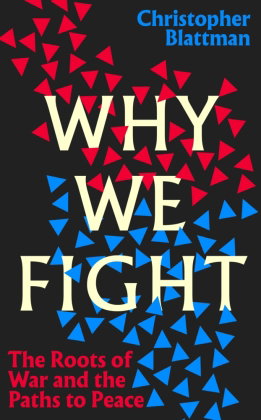
- Verlag: Penguin Books UK
- Autor: Christopher Blattman
- Artikel-Nr.: KNV95408892
- ISBN: 9780241444511
An acclaimed expert on violence and seasoned peacebuilder explains the five reasons why conflict (rarely) blooms into war, and how to interrupt that deadly process.
'Nothing could be more relevant today than war and peace. Why We Fight by Christopher Blattman is an outstanding and original book on this topic' Martin Wolf, Financial Times
It's easy to overlook the underlying strategic forces of war, to see it solely as a series of errors, accidents, and emotions gone awry. It's also easy to forget that war shouldn't happen-and most of the time it doesn't. Around the world there are millions of hostile rivalries, yet only a tiny fraction erupt into violence. Too many accounts of conflict forget this.
With a counterintuitive approach, Blattman reminds us that most rivals loathe one another in peace. That's because war is too costly to fight. Enemies almost always find it better to split the pie than spoil it or struggle over thin slices. So, in those rare instances when fighting ensues, we should ask: what kept rivals from compromise?
Why We Fight draws on decades of economics, political science, psychology, and real-world interventions to lay out the root causes and remedies for war, showing that violence is not the norm; that there are only five reasons why conflict wins over compromise; and how peacemakers turn the tides through tinkering, not transformation.
From warring states to street gangs, ethnic groups and religious sects to political factions, there are common dynamics to heed and lessons to learn. Along the way, we meet vainglorious European monarchs, African dictators, Indian mobs, Nazi pilots, British football hooligans, ancient Greeks, and fanatical Americans.
What of remedies that shift incentives away from violence and get parties back to deal-making? Societies are surprisingly good at interrupting and ending violence when they want to-even the gangs of Medellín, Columbia do it. Realistic and optimistic, this is book that lends new meaning to the old adage, "Give peace a chance."