



Diese Website verwendet Cookies und ähnliche Technologien. Dabei handelt es sich um kleine Textdateien, die auf eurem Computer gespeichert und ausgelesen werden. Indem ihr auf "Alles akzeptieren" klickt, stimmt ihr der Verarbeitung von Daten, der Erstellung und Verarbeitung von individuellen Nutzungsprofilen über Websites und über Partner und Geräte hinweg sowie der Übermittlung eurer Daten an Drittanbieter zu, die eure Daten teilweise in Ländern außerhalb der Europäischen Union verarbeiten (GDPR Art. 49). Einzelheiten hierzu findet ihr in den Datenschutzhinweisen. Die Daten werden für Analysen und für eigene Zwecke Dritter verwendet. Weitere Informationen, auch über die Datenverarbeitung durch Drittanbieter und die Möglichkeit des Widerrufs, findet ihr in den Einstellungen und in unseren Datenschutzhinweisen. Hier könnt ihr mit den notwendigen Tools fortfahren.
- Verlag: De Gruyter
- Autor: John E. Grable
- Artikel-Nr.: KNV95398821
- ISBN: 9783110727494
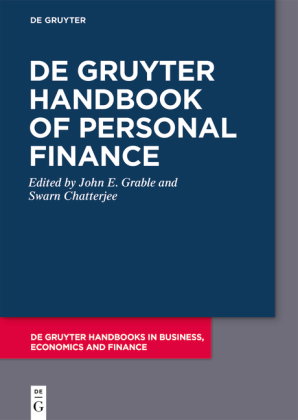
The De Gruyter Handbook of Personal Finance provides a robust review of the core topics comprising personal finance, including the primary models, approaches, and methodologies being used to study particular topics that comprise the field of personal finance today.
The contributors include many of the world's leading personal finance researchers, financial service professionals, thought leaders, and leading contemporary figures conducting research in this area whose work has shaped-and continues to affect-the way that personal finance is conceptualized and practiced.
The first section of the handbook provides a broad introduction to the discipline of personal finance. The following two sections are organized around the core elements of personal finance research and practice: saving, investing, asset management, and financial security. The fourth section introduces future research, practice, and policy directions. The handbook concludes with a discussion on an educational and research agenda for the future.
This handbook will be a core reference work for researchers, financial service practitioners, educators, and policymakers and an excellent supplementary source of readings for those teaching undergraduate and graduate-level courses in personal finance, financial planning, consumer studies, and household finance.