






Diese Website verwendet Cookies und ähnliche Technologien. Dabei handelt es sich um kleine Textdateien, die auf eurem Computer gespeichert und ausgelesen werden. Indem ihr auf "Alles akzeptieren" klickt, stimmt ihr der Verarbeitung von Daten, der Erstellung und Verarbeitung von individuellen Nutzungsprofilen über Websites und über Partner und Geräte hinweg sowie der Übermittlung eurer Daten an Drittanbieter zu, die eure Daten teilweise in Ländern außerhalb der Europäischen Union verarbeiten (GDPR Art. 49). Einzelheiten hierzu findet ihr in den Datenschutzhinweisen. Die Daten werden für Analysen und für eigene Zwecke Dritter verwendet. Weitere Informationen, auch über die Datenverarbeitung durch Drittanbieter und die Möglichkeit des Widerrufs, findet ihr in den Einstellungen und in unseren Datenschutzhinweisen. Hier könnt ihr mit den notwendigen Tools fortfahren.
- Verlag: Penguin Books UK
- Autor: Robin Wall Kimmerer
- Artikel-Nr.: KNV91894915
- ISBN: 9780141997629
'Kimmerer blends, with deep attentiveness and musicality, science and personal insights to tell the overlooked story of the planet's oldest plants' Guardian
'Bewitching ... a masterwork ... a glittering read in its entirety' Maria Popova, Brainpickings
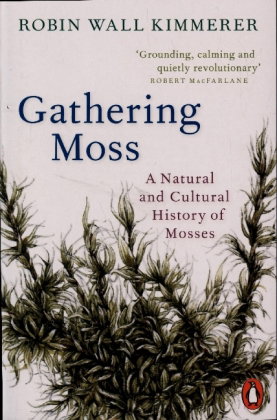
Living at the limits of our ordinary perception, mosses are a common but largely unnoticed element of the natural world. Gathering Moss is a beautifully written mix of science and personal reflection that invites readers to explore and learn from the elegantly simple lives of mosses.
In these interwoven essays, Robin Wall Kimmerer leads general readers and scientists alike to an understanding of how mosses live and how their lives are intertwined with the lives of countless other beings. Kimmerer explains the biology of mosses clearly and artfully, while at the same time reflecting on what these fascinating organisms have to teach us.
Drawing on her experiences as a scientist, a mother, and a Native American, Kimmerer explains the stories of mosses in scientific terms as well as within the framework of indigenous ways of knowing. In her book, the natural history and cultural relationships of mosses become a powerful metaphor for ways of living in the world.