






Diese Website verwendet Cookies und ähnliche Technologien. Dabei handelt es sich um kleine Textdateien, die auf eurem Computer gespeichert und ausgelesen werden. Indem ihr auf "Alles akzeptieren" klickt, stimmt ihr der Verarbeitung von Daten, der Erstellung und Verarbeitung von individuellen Nutzungsprofilen über Websites und über Partner und Geräte hinweg sowie der Übermittlung eurer Daten an Drittanbieter zu, die eure Daten teilweise in Ländern außerhalb der Europäischen Union verarbeiten (GDPR Art. 49). Einzelheiten hierzu findet ihr in den Datenschutzhinweisen. Die Daten werden für Analysen und für eigene Zwecke Dritter verwendet. Weitere Informationen, auch über die Datenverarbeitung durch Drittanbieter und die Möglichkeit des Widerrufs, findet ihr in den Einstellungen und in unseren Datenschutzhinweisen. Hier könnt ihr mit den notwendigen Tools fortfahren.
- Verlag: Hatje Cantz Verlag
- Autor: Christine Chávez
- Artikel-Nr.: KNV94582232
- ISBN: 9783775752022
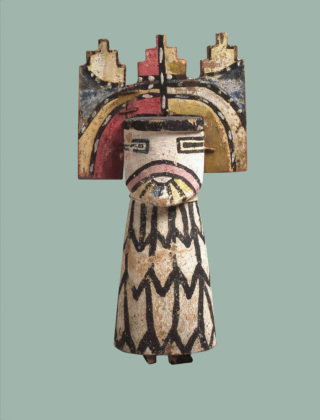
The legacy of the art and cultural scientist Aby Warburg offers many subjects for reassessment. Almost unknown until now are the artifacts he collected on a journey through the southwest of the US in 1895/96 and donated to the Museum für Völkerkunde in Hamburg (today Museum am Rothenbaum). The results first unfolded in Warburg's famous lecture on the "snake ritual" of the Hopi (1923). Following Warburg's transdisciplinary approach, this publication examines his guiding principles in assembling his collection as well as his reading of Pueblo art and culture. It pays tribute to the works and their artistic significance and sheds light on the circumstances of acquisition in the sociopolitical environment of the Pueblo communities of the time. The contemporary fascination with the snake ritual is also a topic. Set against this are the previously neglected perspectives and strategies of Pueblo leaders to regain interpretive sovereignty over culturally sensitive content and imagery.
ABY WARBURG (1866-1929) is considered as the founder of a modern art history oriented towards cultural studies. His research was mainly concerned with the investigation of the afterlife of antiquity in the Renaissance, which he recorded in his iconic Bilderatlas Mnemosyne.